
Data sovereignty in European AI is no longer just a topic for policy papers. It is an operational choice that can impact margins, execution speed, and market confidence. According to McKinsey, sovereign AI could unlock up to €480 billion in annual value by 2030. For an SME, the point is not to chase an abstract ideal of digital autonomy. The point is to understand which data must remain under strict control, which processes can be automated, and how to use analytics platforms without letting compliance become a commercial hindrance.
Many teams view the GDPR, AI Act, NIS2, or Data Act as if they were an unavoidable fixed cost. In practice, they function more like the design rules for an earthquake-resistant building. At first, they seem like a constraint. Then you realize that they are what make the structure livable, insurable, and scalable. In the case of AI tools, this means knowing where data flows, who can access it, which models process it, and what evidence you can provide if a client, auditor, or regulator asks questions.
For a European SME, competitive advantage doesn’t come from doing everything in-house. It comes from building a disciplined, hybrid model—one that protects sensitive data, speeds up analysis, and makes your offering credible to customers who are increasingly concerned about privacy, security, and reliability.
For many SMEs, the concept of AI tools and European data sovereignty sounds like a complex, almost academic concept. In reality, it involves very practical decisions. Where does customer data end up? Who manages the logs? If a model is trained or run outside the EU, how do you respond to an audit request? And how quickly can you launch a new use case without opening yourself up to legal issues?
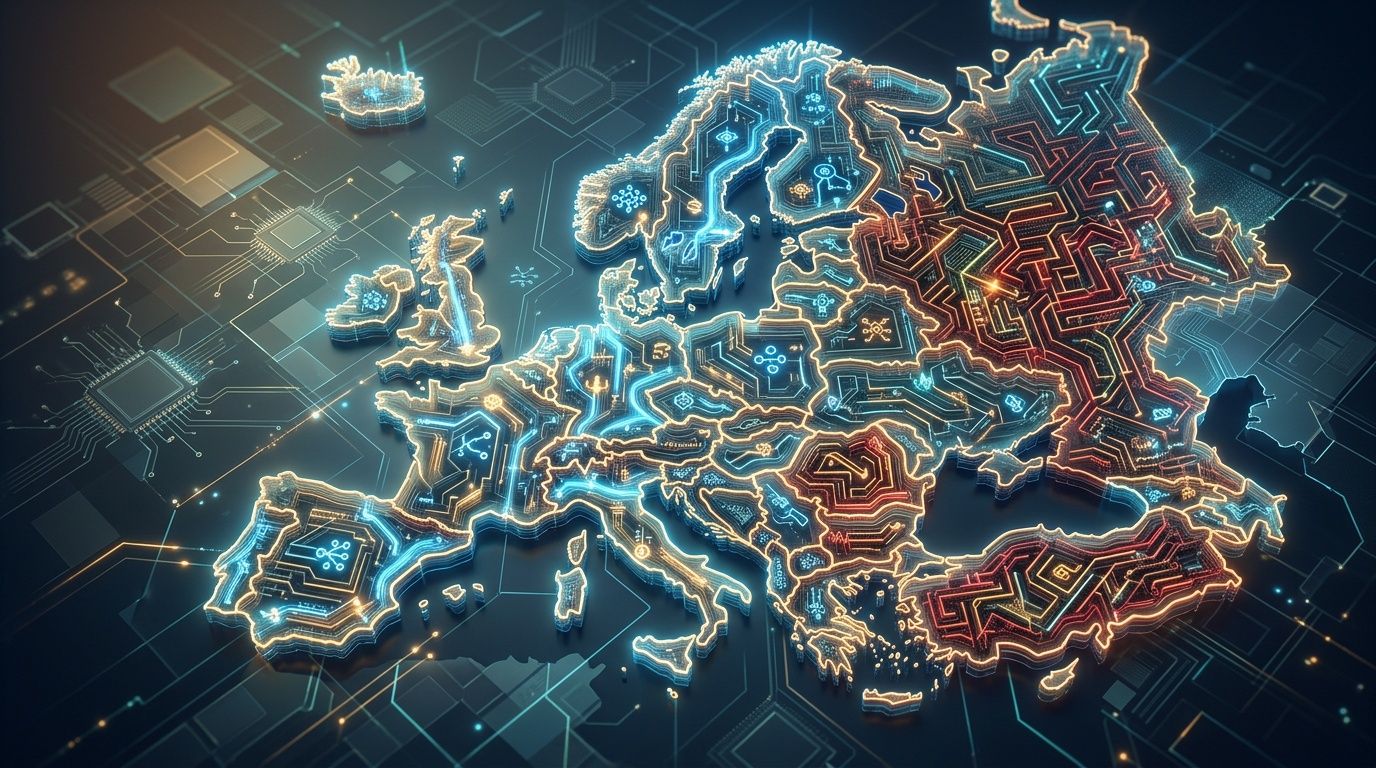
The dilemma is clear. You want to use advanced analytics, forecasting, report automation, and predictive models. But you don’t want to find out too late that your processes depend on opaque data transfers, third-party vendors outside your organization’s scope, or configurations that no one on the team can explain. This is where data sovereignty stops being a legal issue and becomes a matter of corporate governance.
The right question isn’t whether compliance will slow down innovation. The right question is which architecture allows you to innovate without losing control.
SMEs that handle this transition effectively don’t treat the GDPR and the AI Act as mere checkboxes. Instead, they turn them into criteria for technology selection, internal policies, and a competitive advantage. If you sell to enterprise clients or operate in finance, retail, or regulated services, this capability already carries weight in negotiations.
The most useful definition isn’t a legal one. It’s a practical one. Data sovereignty refers to your ability to decide, restrict, and demonstrate how data is stored, processed, and shared. It’s not enough to know which data center it’s located in. You also need to know who exercises actual control over it.
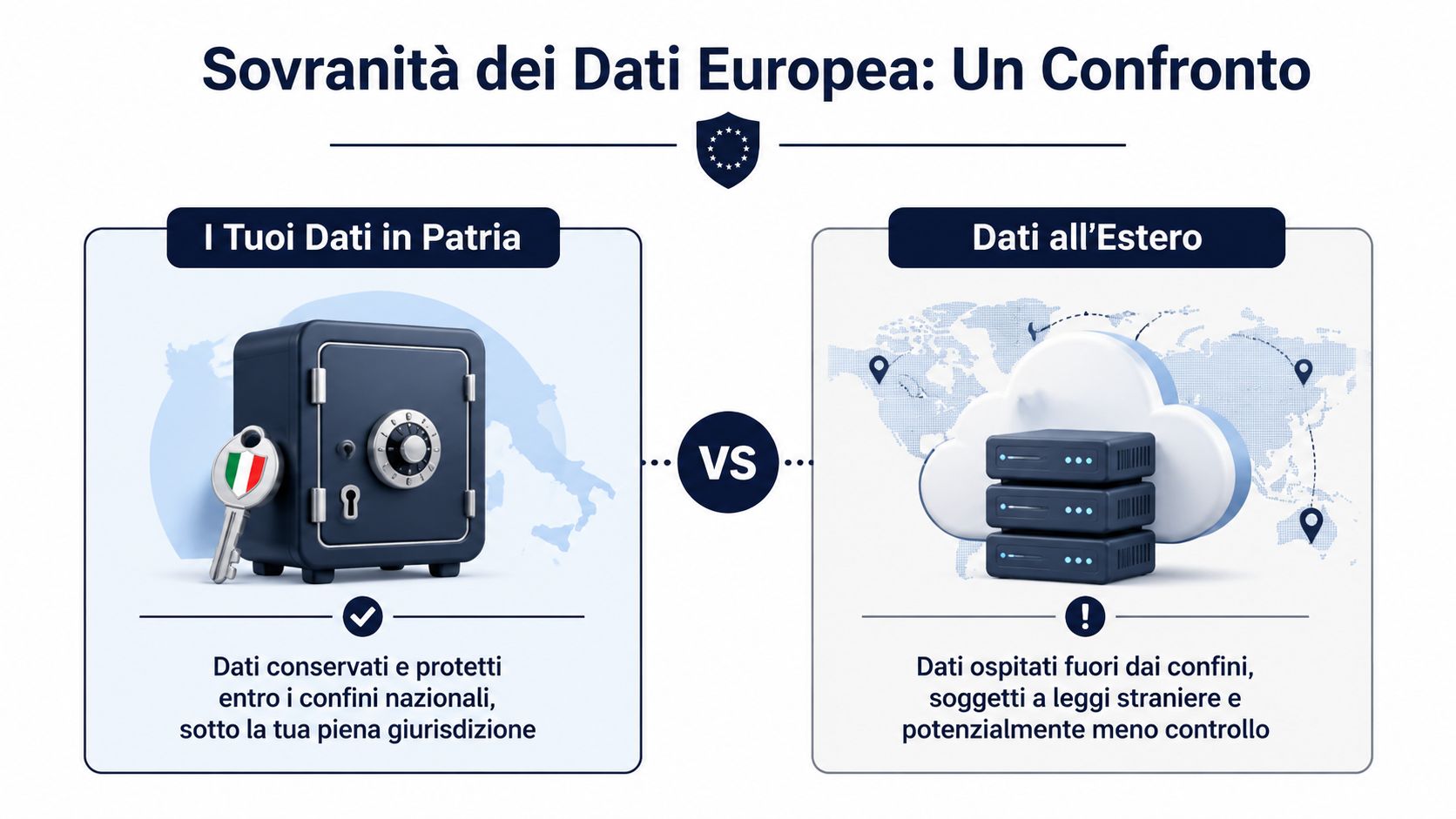
The simplest analogy is that of a safe. If you keep critical documents at your office, locked away and with access logs, you maintain direct control. If you place them in a safe deposit box overseas, even if the service is excellent, you enter a system of rules, exceptions, and dependencies that you do not fully control. The same thing happens in AI systems. A dataset can be “in Europe” and, at the same time, be managed through service and access chains that reduce your actual control.
The first is legal compliance. You need to know which laws apply to the data and what mechanisms govern any international transfers or access.
The second is technical control. You must be able to locate the data, segment it, restrict its release, and track who uses it.
The third is operational control. It requires the ability to translate policies and requirements into repeatable processes. Without this level, compliance remains theoretical.
This table is a useful resource for managers.
| Pillar | Question to ask | Risk if missing |
|---|---|---|
| Legal | Who regulates access to my data? | Weak contracts and unclear transfers |
| Technician | Can I restrict where the data is processed? | Invisible flows and poor traceability |
| Operational | Can I demonstrate compliance with the policies? | Challenging audits and fragile manual processes |
The market is evolving rapidly. McKinsey estimates that data sovereignty in European AI could unlock up to €480 billion in annual value by 2030. In this context, 62% of European organizations are already seeking sovereign solutions, and in the banking sector, that figure rises to 76%. This data changes the way we should interpret the issue. Not as a compliance cost, but as a factor in accessing value, especially in sectors where trust, auditability, and data protection influence purchasing and renewal decisions.
For an SME, data sovereignty has at least three concrete effects:
Rule of thumb: Data sovereignty doesn’t require you to lock everything away behind a fence. It requires you to know which gates must remain closed, which ones can be opened, and who is authorized to use them.
When teams frame the issue in these terms, AI tools and European data sovereignty cease to be seen as an administrative burden and instead become a design criterion. It is the same shift that transforms a security expense into a factor in the reliability perceived by the customer.
Many companies view European regulations as a collection of separate texts. To make informed decisions about AI tools, however, it is better to view them as a cohesive system. Each regulation covers a different aspect of the same process. The GDPR governs the processing of personal data. The AI Act introduces specific obligations for AI systems. NIS2 and DORA focus on resilience, security, and incident management. The Data Act broadens the discussion on data access and use.

For an SME, the point isn’t to memorize legal provisions. The point is to translate the regulatory framework into four key management questions: What data are we processing? For what purpose? With which suppliers? And what documentation can we provide if asked to prove it?
The GDPR remains the foundation because it applies whenever an analytics or machine learning system processes personal data. From a business perspective, it imposes requirements regarding data collection, processing purposes, access, security, and accountability. The potential fines serve as a reminder that this is not merely a theoretical matter. The data sovereignty framework underscores that GDPR violations can result in fines of up to 20 million euros or 4% of annual global revenue.
This does not mean that every dashboard or predictive model poses a serious risk. It means that every data flow must follow a logical, understandable, and defensible process. If the team cannot explain why that data is included in the model, where it is pre-processed, or who can export it, the risk is not just legal. It is also operational.
Anyone looking for a simple example can look at a company data policy like ISOCOSTRUZIONI’s. It’s not a comprehensive AI compliance manual, but it clearly illustrates one thing: data transparency isn’t just for regulators. It helps customers understand how an organization handles data.
The AI Act adds a whole new dimension. It doesn’t just focus on personal data. It looks at the AI system itself, its risks, documentation, and human oversight. For managers, this changes the question. It’s not enough to ask whether the data is being processed correctly. You also need to ask whether the system has been selected, configured, and monitored in a way that is consistent with its operational impact.
NIS2 and DORA are shifting the focus once again. They require organizational robustness. If an incident occurs, if a supplier creates a vulnerability, or if a process relies on untraceable components, the issue is no longer just about privacy. It becomes a matter of business continuity.
For a deeper understanding of the regulatory framework governing AI tools, this analysis by ELECTE on the European AI Act may be helpful, particularly in understanding the relationship between transparency requirements and the practical use of platforms.
The least-discussed aspect is also the most interesting. AI is not merely a subject of regulation; it can be part of the solution. Clifford Chance notes that AI is beginning to automate data classification and policy enforcement on a large scale. For an SME, this changes the economics of compliance.
In practice, automation can help:
If compliance remains a manual process, it grows more slowly than the business. If it becomes an automated workflow, it can support growth rather than hinder it.
This is essential reading for decision-makers. Regulations don’t just call for greater caution; they push companies to develop more mature governance practices. Those who do this well don’t just avoid penalties—they improve operational quality, internal controls, and business credibility.
The main issue is not regulatory; it is structural. Many SMEs want to use highly advanced models and services, but fear that choosing international providers will reduce their control over their data. The debate is often framed as an either/or choice: either global innovation or local sovereignty. In practice, this view is too simplistic.
Accenture points out a paradox worth keeping in mind: 65% of European organizations acknowledge that they cannot remain competitive without non-European technology providers, yet only 36% of AI initiatives actually require a strict sovereignty approach for regulatory reasons. The conclusion is not “so sovereignty doesn’t matter much.” The conclusion is more nuanced. Sovereignty must be applied where it truly matters, not indiscriminately.
Data residency answers the question “where is the data located?” Data sovereignty answers the question “who has legal, technical, and operational control over that data?”
A useful analogy is that of a warehouse. If your inventory is stored in a warehouse within the country, you’ve resolved the issue of location. But if access badges, locking systems, movement logs, and intervention protocols are controlled by other parties, your actual control is weaker than it appears.
For this reason, an SME should distinguish between:
The hybrid model functions like a professional kitchen with two zones. In the first zone, you handle the most delicate ingredients, with strict access controls and rigorous procedures. In the second zone, you use more powerful and faster tools for preparation, but only after ensuring that the critical elements are secure. Applied to AI, this means local or on-premises pre-processing for sensitive data and the selective use of external models or services on data that has already been verified or transformed.
This approach has several operational advantages:
Strategic observation: Treating all data as if it were equally sensitive is just as inefficient as treating it all as if it were not sensitive at all.
True technical maturity does not mean hosting everything in one place. It means designing different workflows for different risks.
The choice of technology model is also important here. In many cases, the differences between infrastructure, platform, and software-as-a-service directly affect the level of control you have over configurations, pipelines, and logs. For those evaluating this issue from an architectural perspective, this ELECTE guide on IaaS, PaaS, and SaaS helps translate cloud models into practical governance implications.
For an SME, the question isn’t which model is objectively the best. It’s which combination allows you to keep critical functions within the scope you can manage and delegate the rest without losing visibility. If the vendor can’t explain this separation in simple terms, the architecture is likely less controllable than it seems.
In this context, a secure computing environment is similar to a cleanroom with controlled access, cameras, entry logs, and materials that cannot be freely removed. It doesn’t make it impossible to work. It makes the work more disciplined, traceable, and defensible as the stakes rise.
Compliance becomes manageable when it stops being a collection of exceptions and becomes an architectural choice. For an analytics platform, the turning point is to classify data properly and apply controls that are consistent with that classification. This is where the topic of AI tools and European data sovereignty moves from theory to practical implementation.
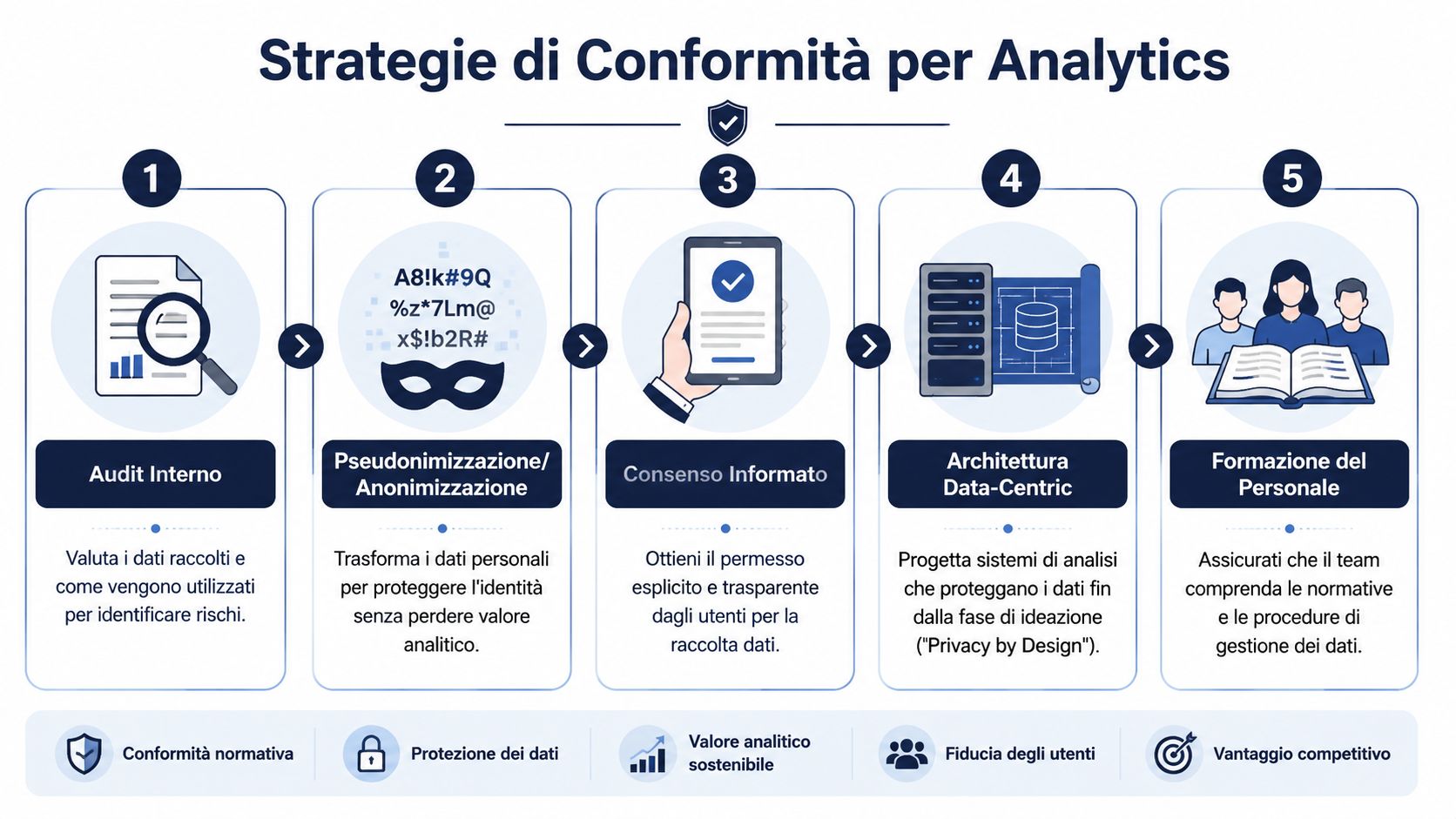
The most useful framework for decision-makers who need to make choices without getting bogged down in technical details isa three-tier classification architecture. The Data Sovereignty Framework describes a model in which “sovereignty-critical” data requires strict technical controls, such as network policies that restrict data egress, DLP rules that detect personal data, and automatic alerts when data is accessed from unexpected regions.
In business terms, this means:
If you don't make this distinction, the team will end up at one of two wrong extremes. Either it will shut everything down, or it will open up too much.
The technical side may seem daunting, but it actually has a very concrete counterpart in the business world.
| Technical inspection | What does that mean in practice? | Benefits for SMEs |
|---|---|---|
| Restrictive network policies | Data does not leave authorized environments freely | Less exposure to and less reliance on manual exceptions |
| DLP Rules | The system detects personal data in transit | More prevention, fewer ex post checks |
| Automatic alerts | The team is notified of unusual logins or patterns | Faster response and traceability |
| Policy-as-code | The rules are applied automatically | Consistent governance even as the user base and use cases grow |
Here, a fact that is often overlooked comes to light. The framework itself notes that this infrastructure can increase latency by 15–22%, but it ensures compliance and reduces the legal risk associated with the GDPR, which can amount to as much as 4% of annual global revenue. For many SMEs, this is not a technical detail. It is an economic choice between a controlled slowdown and uncontrolled exposure.
A well-managed platform isn't one that just keeps speeding up. It's one that knows when to accelerate and when to slow down.
The most useful approach doesn't start with the tool. It starts with the data and the processes.
Map the actual datasets
Not the theoretical ones in the IT diagram. The ones that actually end up in reports, predictive models, and exports. Many issues stem from files, integrations, or local copies that no one takes into account in the initial design.
Assign a sensitivity class
What’s needed here is pragmatism. Some data require strict residency and control. Others can be transformed before analysis. Still others can be handled using standard rules.
Define the transformation points
Pseudonymization, data minimization, and aggregation aren’t just technical details for specialists. They’re the ways you reduce risk without losing all the analytical value.
Automate the application of rules
If policies are confined to PDFs or informal procedures, sooner or later someone will inadvertently circumvent them. Automation is precisely what’s needed to eliminate discretion where it shouldn’t exist.
Develop evidence, not just policies
In an audit, evidence is what counts. Who had access. From where. To what data. With what authorization. Mature governance produces verifiable records, not just good intentions.
A company operating in Italy must also consider the local aspects outlined in the framework, such as the use of sovereign cloud infrastructures certified by the Italian government for specific needs and compliance with NIS2, which takes effect in October 2024 according to the same reference cited above. This is not just a matter for legal specialists. If you sell or manage processes in sensitive sectors, it should be factored into your procurement assessment.
This is the strategic turning point. A sound compliance framework isn’t just about “avoiding mistakes.” It’s about streamlining processes, speeding up checks, and building more trustworthy relationships with customers and partners.
The choice of an AI platform shouldn’t be based solely on its visible features. Sleek dashboards and insights generated with a single click matter—but they come second. The most important question comes first: Can this provider keep up as my business grows, enters a more heavily regulated industry, or undergoes a rigorous due diligence process?
Use this checklist as an assessment tool. Even a vague answer can be useful information.
Where is the data stored and processed?
Don’t just focus on the data center’s location. Also ask where pre-processing, logging, backup, and operational support take place.
What data leaves the main environment, and under what conditions?
A mature provider knows how to distinguish between raw data, processed data, metadata, and output.
Are there controls in place to limit unauthorized transfers and access?
The answer should include technical mechanisms, not just contractual promises.
Are policies applied manually or automatically?
If governance relies on tickets, exceptions, and occasional checks, it won't scale well.
How is traceability managed?
Ask what records you can obtain regarding access, exports, changes, and anomalies.
Does the provider support hybrid architectures?
This is often the dividing line between a flexible platform and one that forces your processes to conform to its limitations.
How do you address the European requirements for privacy by design and AI governance?
You don’t need a legally flawless answer. You need a clear, actionable, and verifiable answer.
For those looking for an example of an approach centered on architecture and privacy by design, this overview of ELECTE version 3 on SaaS AI and privacy by design is useful because it demonstrates how a provider can present the relationship between user experience, infrastructure, and data protection in a way that is accessible even to a non-technical team.
If you can’t get simple answers to simple questions, you’re not looking at a transparent solution. You’re looking at a dependency that’s hard to manage.
Here lies an opportunity that many SMEs overlook. The debate on data sovereignty tends to focus on bans, restrictions, and control. But a well-designed European infrastructure can also expand access to high-quality data.
This point deserves attention because it changes the narrative. Sovereignty is not just about defense. It can become a driver of competitiveness if it allows an SME to work with data that is more representative of its market, with fewer bilateral negotiations and more structured licensing agreements.
In practice, when evaluating an analytics platform, you should also ask yourself this:
| Question | Why it matters |
|---|---|
| Can the platform integrate with European data ecosystems? | Expand the potential for training and data enrichment |
| Does it support models trained on data relevant to my market? | Improve the accuracy of forecasts |
| Does it provide clear governance of data licenses? | Reduces legal and operational friction |
The choices you make today affect your freedom tomorrow. A closed, opaque tool—or one focused solely on immediate functionality—may seem convenient. But when your company enters new industries, deals with more demanding customers, or needs to integrate new data sources, that initial convenience can turn into migration costs and lost momentum.
European data sovereignty is not a barrier to innovation. It is the framework that enables innovation to endure over time. For an SME, this means shifting from a defensive approach to compliance to a strategic one. You’re not just avoiding problems. You’re building a more credible, selective, and mature way of using AI.
The bottom line is simple. Not all data requires the same scope. Not all use cases require the same level of control. Not all vendors offer the same level of transparency. When you clearly distinguish between these levels, you can use AI more quickly and with less unnecessary risk.
Companies that excel in this area gain an advantage that is unspectacular but very tangible. They are able to clearly explain their business model to customers, partners, auditors, and investors. This reduces commercial friction, improves the quality of technology decisions, and makes growth more sustainable.
AI tools and European data sovereignty—when viewed in this light—are not just technical jargon. They are a managerial principle. They help you make better choices, design better solutions, and negotiate more effectively. And this is precisely where a regulatory burden becomes a defensible competitive advantage.
Note: This content is for informational purposes only and does not constitute legal or regulatory advice. For decisions regarding the GDPR, AI Act, NIS2, DORA, or specific sectoral requirements, please consult with qualified advisors.
If you want to move from theory to practice, ELECTE offers an accessible way to turn complex data into useful insights, with a European approach to AI analytics designed for SMEs. You can explore forecasting, automated reports, and guided analytics without adding unnecessary complexity to your tech stack. Discover how to work with your data with more control and clarity.

.svg)


.svg)
.svg)