
I recently rebuilt part of ELECTE’s video pipeline following a technology stack migration, and this experience has left me with a very practical conviction: AI-powered video analysis is no longer just “lab-based” technology. Today, you can upload a video, ask a question in natural language, and get useful output to help you work more effectively—even without an in-house computer vision team.
For Italian SMEs, the point isn’t to chase the most spectacular demo. The point is to understand where this capability delivers immediate operational benefits. By 2026, AI-powered video analysis had evolved from simply detecting objects to understanding content, speech, and context. This changes everything for those who manage training, sales demos, quality control, security, or corporate video archives.
In this article, I’ll provide some clarity on the current landscape from a practitioner’s perspective. We’ll explore what it really means to “analyze” a video today, how the technical pipeline has been simplified, which tools really matter, where SMEs can derive tangible value, and what limitations they should be aware of before getting started.
The most useful definition today is this: video analytics using artificial intelligence means transforming video content into searchable, structured information that can be used to make operational decisions. It is no longer just a matter of “seeing” a person or a vehicle in a frame.
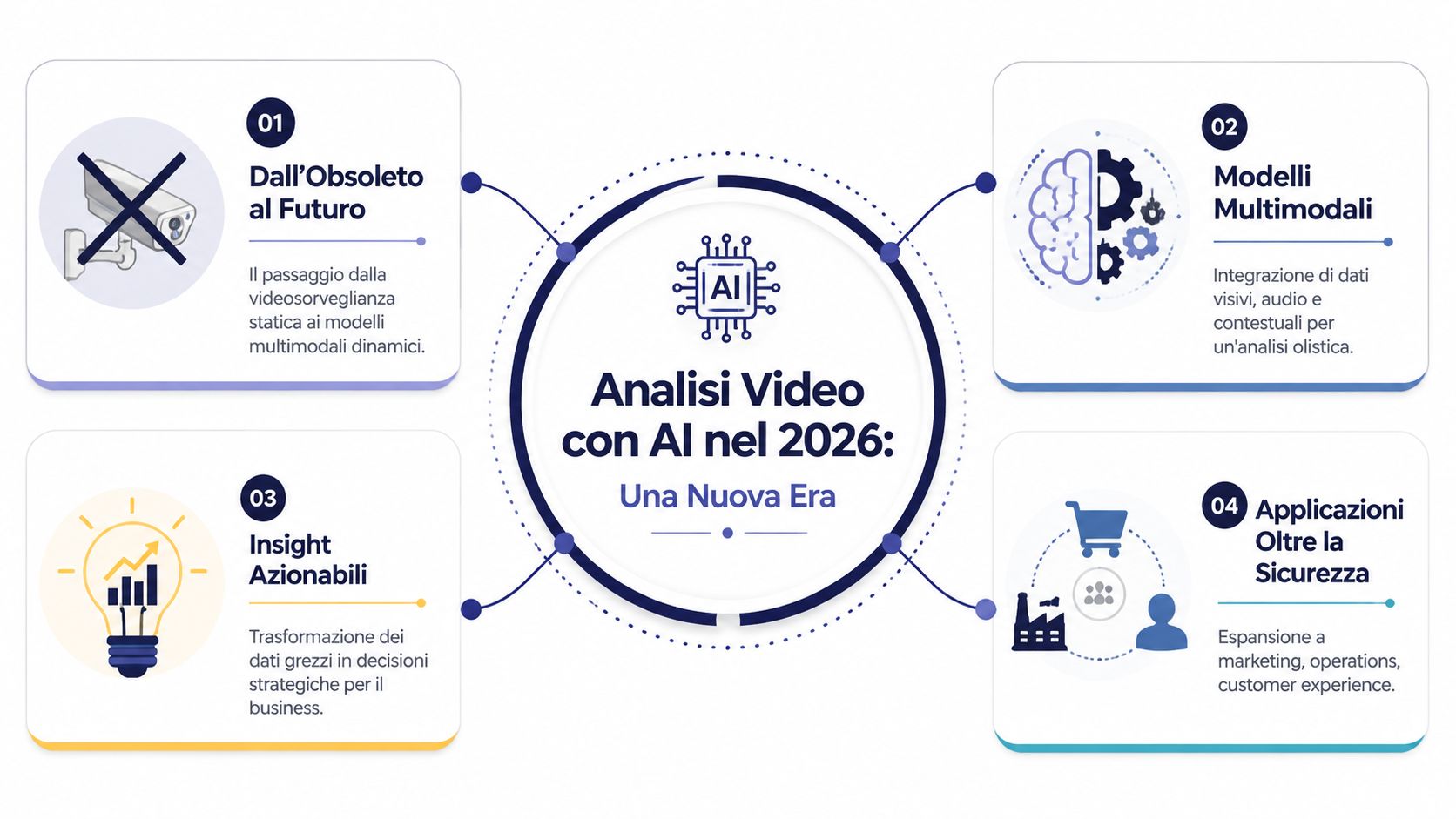
The simplest way to explain it is this. First-generation systems behaved like an operator who watches a monitor and checks boxes: person present, car present, movement detected. Today’s multimodal models work more like an analyst who observes the scene, audio, timeline, and language, then connects it all into a meaningful whole.
This leap is evident in very specific cases:
A good practical test isn't to ask the model, "What do you see?" It's to ask, "At what point does the tone of the conversation change?" or "When is issue X discussed?"
This evolution didn’t come out of nowhere. According to Aitek, which specializes in deep learning-based video analysis, deep learning makes it possible to create algorithms capable of learning from experience without predefined mathematical models, while Axitea emphasizes that AI-powered video analysis operates in real time and minimizes false alarms. The key point for businesses is that the system is no longer limited to rigid rules. It learns patterns.
In our day-to-day work, this changes three things in particular:
That’s why the line between video analysis, speech analysis, and knowledge extraction is blurring. If you manage video content at your company, you’re no longer just dealing with media. You’re dealing with data.
For years, the issue wasn't whether video analytics was useful. The issue was implementing it without creating a project that was complex, expensive, and time-consuming to maintain.
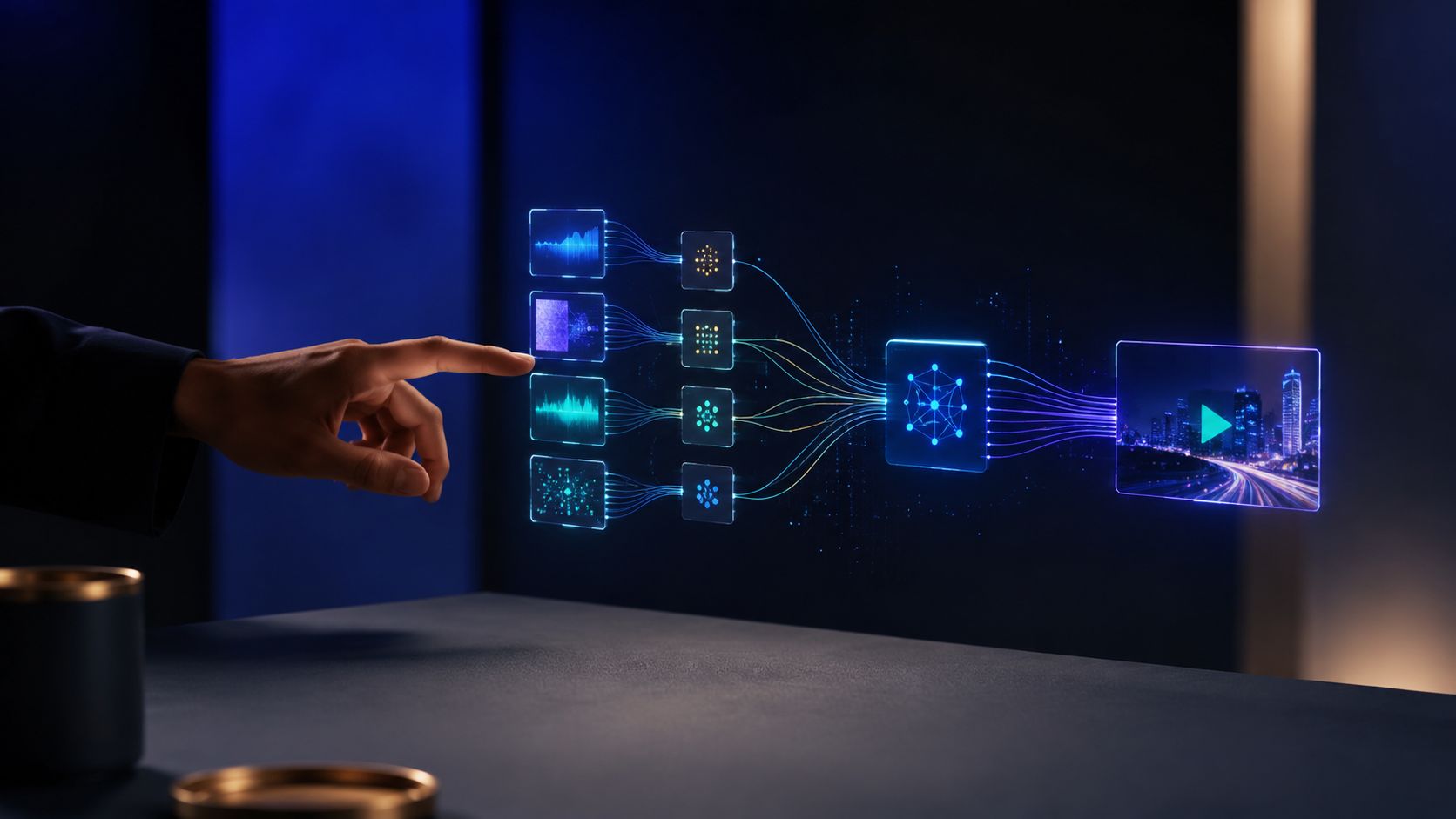
The traditional pipeline was lengthy. It involved video acquisition, frame extraction, cleaning, annotation, model training, testing, deployment, monitoring, and review. In enterprise settings, it still makes sense, especially when full control over the model is needed or when the environment is highly specific.
Microsoft's Italian documentation clearly describes this architectural logic: cloud video analytics breaks videos down into frames, produces results in JSON, and makes them accessible through BI tools as well. In practice, the video ceases to be an opaque file and becomes a data pipeline.
For many initial use cases, the workflow has been simplified to three steps:
This is where tools like Google AI Studio with Gemini have truly lowered the barrier to entry. Not because they eliminate technical complexity entirely, but because they shift it. The challenge is no longer “how do I train a model,” but “what question do I ask, and how do I verify that the answer is actually useful to me.”
An SME can start with very specific requests:
Rule of thumb: The best early tests don't aim for absolute precision. They aim for immediate practical utility.
This is the same shift in mindset that we see in other areas of enterprise AI. In the past, you would build the pipeline first, then hope to gain insights. Today, you can start with the desired insight and see if the technical workflow supports it. If you’d like to explore that step further, I also recommend this article on how to transform data with enterprise AI.
This new accessibility is real, but it can be misleading. Just because an interface seems simple doesn't mean the project is automatically ready for production.
A useful distinction:
Scenario | Sensible Approach | Exploratory Analysis of Internal Videos | General-Purpose Multimodal Tools | Regulated or High-Risk Process | Workflow with Human Review and Validation | Continuous Large-Scale Monitoring | Dedicated Architecture and Stable Integrations
Technology is much more accessible. Operational discipline remains essential.
The market is confusing because the “video AI” label encompasses a wide variety of products. If you don’t separate the categories, you’ll be comparing things that serve different purposes.
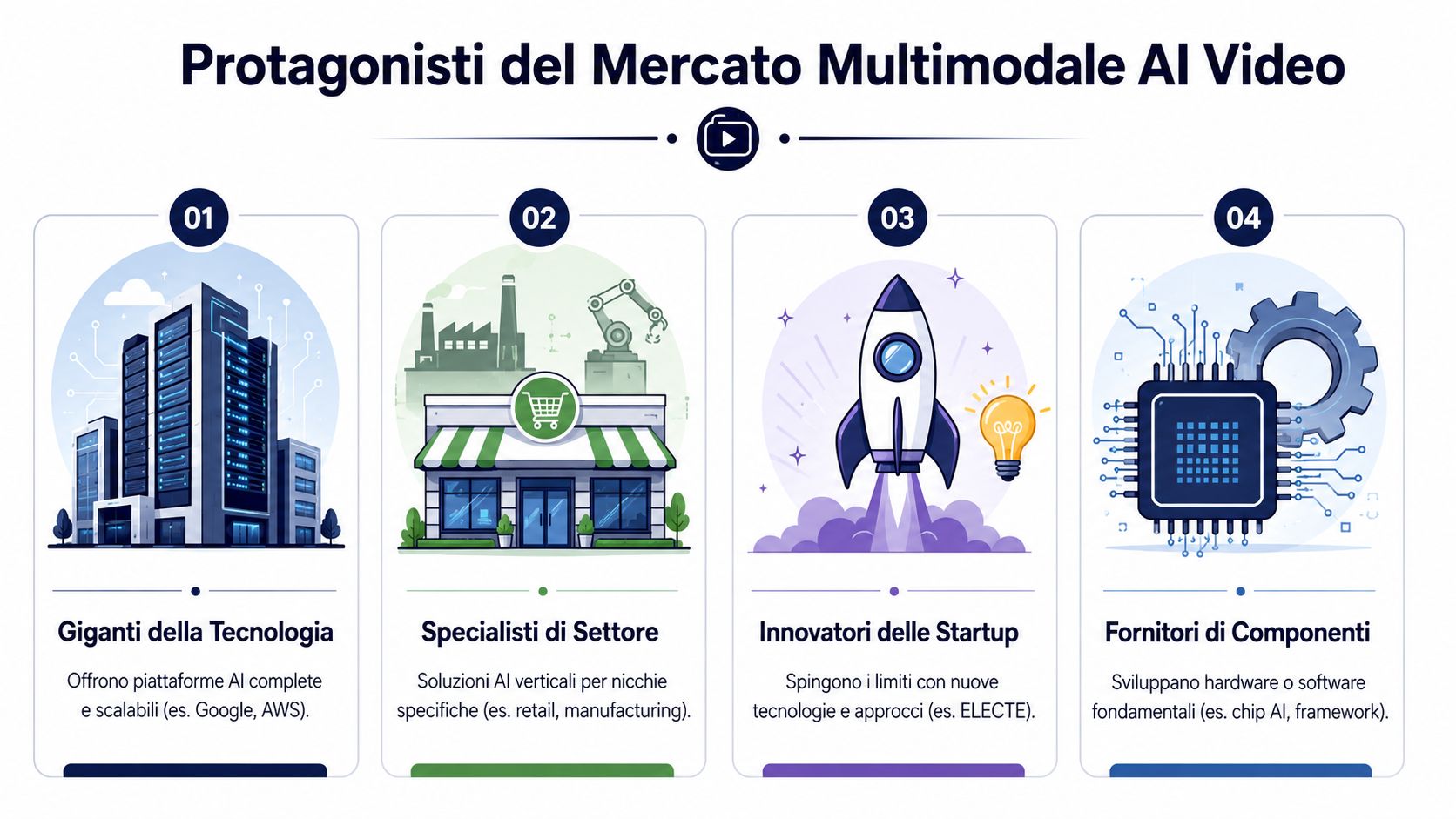
For a business, these are the two main categories.
understanding models are used to interpret existing videos. This category includes platforms such as Gemini and GPT-4o, which have multimodal capabilities that allow users to query a video, summarize it, extract themes, identify relevant moments, and link images, speech, and context.
Generation Models These are used to create or edit videos. This group includes tools such as Veo, Sora, Kling, Seedance, and other products focused on visual generation, editing, or transforming prompts into video sequences.
For an SME, the difference is crucial. If you want to understand what’s happening in your recorded calls, courses, or how-to videos, you need “understanding.” If you want to produce marketing or creative content faster, look to “generation.”
I use a very simple framework when evaluating an instrument.
Don't choose based on the best demo. Choose based on the business problem you need to solve.
Then there is a third category that many underestimate: vertical specialists. In security, retail, and wide-area monitoring, dedicated architectures still play a major role. Zytekno, for example, describes a VAS architecture with separate components for analysis, management, and data fusion—a technical choice that makes sense when you need to orchestrate inference, data integration, and visualization without compromising response times.
That’s why it doesn’t make much sense to talk about the “best platform” in the abstract. It makes more sense to distinguish between:
The most useful application we've found for it internally isn't related to video surveillance. It's related to recorded sales demos.

We tested Google AI Studio with Gemini 2.5 Pro using demo recordings from the platform. The goal was simple: to understand where prospects actually took action, which objections came up most often, and at what points their attention waned.
The most interesting finding was not “technical.” It was operational. The AI revealed a pattern that was intuitively apparent, but did not emerge clearly when reviewing the recordings manually: the moment of greatest interest coincided with the display of the automated reports, not with the explanation of the architecture or features.
From there, we changed the structure of our demos. Now we show the final result first, and only then, if necessary, do we go into detail about the process.
When a video becomes searchable, you stop passively watching it. You start using it as a knowledge base.
I’m not presenting this as an enterprise-level video intelligence case study. It’s a much more useful example for an SME: a quick test using existing content that can lead to a concrete operational decision.
The most useful applications today are those in which the video already contains business knowledge, and the challenge is to retrieve that knowledge efficiently.
If you record onboarding sessions, procedures, or technical sessions, AI can:
Recorded calls, demos, interviews, and video reviews can be analyzed to:
More caution is needed here, but the potential is real. In production lines or repetitive processes, AI-powered video analysis can help flag anomalous patterns or non-compliant steps. The level of reliability depends heavily on the environment, video quality, and the degree of variability in the scene.
We ourselves use AI tools in our video production pipeline. In these cases, the value lies not only in generating assets, but also in speeding up iteration, tagging, retrieving key moments, and adapting content.
For those who want to see broader examples of AI adoption in business, it’s worth exploring some client transformation stories, keeping in mind that these are not specific cases of video analysis.
The quickest way to fail at AI-powered video analysis is to treat it as a foolproof solution. It isn't. It's a tool for accelerating progress.
The least-discussed aspect is also the most important: verifying that the system performs well outside of ideal scenarios. A 2025 report from the University of Milan found that only 12% of Italian companies in the video surveillance sector have rigorous validation protocols, and 68% report classification errors under variable lighting conditions. In the Italian market, this highlights a very real gap in validation under real-world conditions.
This is also true for SMEs that don’t specialize exclusively in video surveillance. The principle is the same: the model may perform well in the demo but may struggle when faced with noisy audio, technical jargon, shaky footage, poorly lit scenes, or very long videos.
The first countermeasure is simple, but it works: start with low-risk use cases. Analyzing a training library or commercial recordings is different from making automated decisions in a security or compliance context.
The second step is to segment. In my tests, multimodal models perform better on shorter, thematically consistent content. When a video is long, it’s best to break it down into logical segments and consolidate the insights afterward.
Here's the minimum set I recommend:
The typical mistake isn't adopting AI too soon. It's giving it the final say too soon.
Another pitfall involves operating costs, especially in SMEs. As the project expands, factors such as auditing, exception handling, updates, and internal training come into play. If you don’t plan for these elements, the pilot will remain nothing more than a polished demo without any long-term sustainability.
An insight gained from a video is valuable. But on its own, it remains isolated. The ROI comes when you connect that insight to the other data that drives the business.
Here are three simple examples.
If a recurring issue emerges from a video review, the real value comes when you cross-reference it with sales, returns, and service tickets. If you identify a frequent objection in a sales recording, the next step is to compare it with conversion rates by segment. If an operational video indicates a possible anomaly, you need to link it to production, maintenance, and spare parts availability.
The logic is the same across all industries: video provides context. Management systems deliver economic and operational benefits.
This is where the most important point for analytics professionals comes in. Business data is no longer just spreadsheets, ERP systems, and CRMs. It also includes transcripts, audio files, images, meeting recordings, and process videos.
In the body of the article , I mention ELECTE, an AI-powered data analytics platform for SMEs, in this specific context: not as a specialized video analysis tool, but as a hub for integrating insights from various sources and using them for decision-making, automated reporting, and operational monitoring. If you’re considering how to measure the economic value of these initiatives, this in-depth article on optimizing AI ROI for small businesses may be helpful.
The maturity of AI-powered video analytics isn't measured by the number of features a demo showcases. It's measured by the ability to integrate into an existing decision-making workflow without creating another silo.
For an SME, this is the right question to ask: Does the insight gained from the video change a decision, improve a process, or reduce review time? If the answer is no, the technology is interesting but not yet useful. If the answer is yes, then it makes sense to integrate it into your analytics stack.
If you want to understand how to integrate insights from structured data and unstructured content into a single decision-making process, check out how ELECTE works. It’s the most practical way to turn insightful analyses into actionable decisions that your team can easily understand.

.svg)


.svg)
.svg)