
Are you looking for a business plan app? Hold on a second. Most of these tools are designed to produce a professional-looking document. The problem is that a business plan isn't valuable because of how polished it looks, but because it forces you to think carefully about the market, margins, costs, timelines, and risks.
The most common mistake is to confuse the template with the strategy. This often happens with highly guided tools: you fill in the fields, choose a clean layout, export the PDF, and think you’re done. In reality, you’ve only rushed through the process. If the assumptions are weak, the plan remains weak.
This is even more important today. Founders who write a formal business plan are up to 260% more likely to succeed than those who don’t, according to data from industry studies cited in the mobile market research. The point isn’t the document itself. It’s the planning process.
That’s why this guide to the best business plan apps isn’t just a superficial ranking. It helps you distinguish between tools that let you write and tools that make you think, and understand when guided software is enough and when you actually need real data, spreadsheets, and serious analysis. Whether you’re preparing a plan for a bank, an investor, a grant application, or for internal decision-making, this distinction makes all the difference.
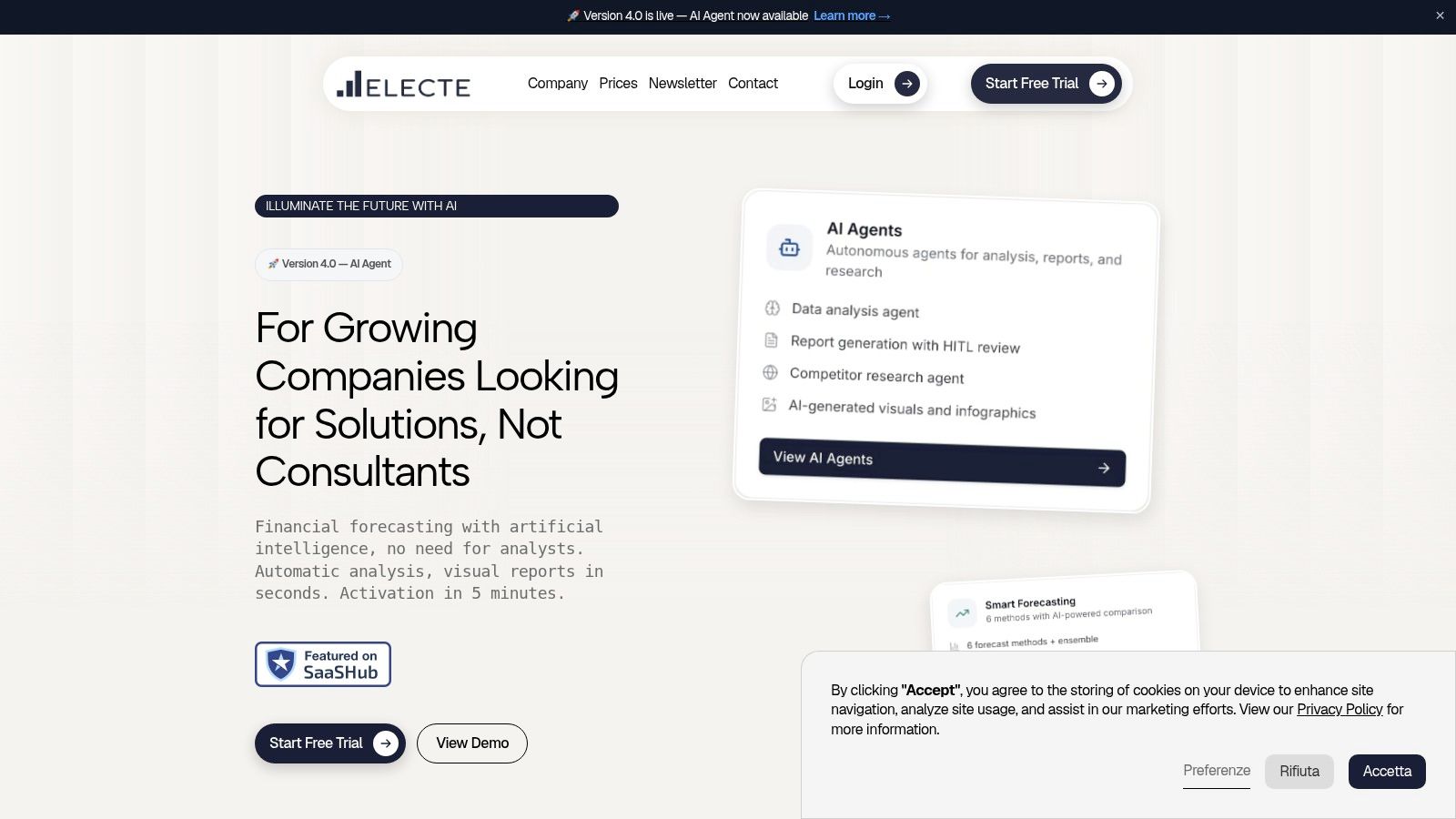
ELECTE is designed for those who have moved beyond the template phase and need to defend real numbers.
The point isn’t to produce a well-organized document. Many people can do that. The point is to build a plan that can withstand a simple question from a bank, a partner, or a CFO: Where do these assumptions come from? This is where the difference lies between a business plan generator and a planning tool. ELECTE falls into the latter category, because it works best when there is already operational data available to be transformed into credible financial forecasts.
For an active company, the method matters more than the visuals. Historical sales, costs, profit margins, cash receipts, seasonality, and variances matter far more than a well-written narrative. In Italy, this aspect is even more critical, because the real challenge for SMEs isn’t just putting together the plan once. It’s keeping it up to date and useful for monthly decision-making, as ThinkLions notes in its in-depth analysis of continuous business planning.
ELECTE makes sense when the business plan isn’t created from a blank page, but rather from data already available within the company—data that’s often scattered across accounting, sales, and operations. If you can connect these sources, the plan ceases to be a mere formality and becomes a framework for making decisions.
I think it's particularly suitable in three cases:
A rule of thumb can help you figure out if you're targeting the right audience.
If your projections are based on nothing more than unverifiable historical data, you're writing a document. You're not yet managing a plan.
Then there is the issue of context. The use of the cloud among Italian SMEs had already been on the rise in recent years, as reported in the market analysis of business plan software published by Straits Research. Today, that data serves more as background information than as evidence. The practical point is another: among Italian companies that already use SaaS tools, a platform capable of collecting data and feeding it into a forecasting model starts out with a concrete advantage.
Let’s be clear about this. If you’re still in the idea phase, or if you’re validating a problem with no track record, ELECTE isn’t the first tool you should turn to. At that stage, you first need to clarify your assumptions, market, and business model. ELECTE becomes more useful later on, when you want to stop presenting plausible plans and start building verifiable ones.
LivePlan is probably one of the most recognizable names when it comes to business plan apps. I understand why people like it. It walks you through the process, offers a clear structure, examples, guided projections, and a final product you can present with confidence.
For those starting from scratch, this really helps. If you've never written a business plan before, a guided framework reduces the initial hurdles and prevents you from leaving out important sections like the executive summary, market analysis, operational plan, and financial projections.
LivePlan really shines in two situations. The first is when you need to quickly build a complete initial version. The second is when you need a document that external stakeholders can easily understand, especially if they’re still thinking in terms of a “traditional plan.”
Key strengths:
The problem is also its main advantage. The structure can become a cage. As you fill in the fields, the plan takes shape, and you risk not realizing that many assumptions haven't actually been tested.
LivePlan is great for organizing your thinking. It's not enough to validate it.
I’d gladly use it for the structure, but less so as a guide to the substance. If you need to submit a business plan to a bank or use it in a due diligence process, the narrative section of LivePlan is useful. The projections, on the other hand, should be developed elsewhere—especially using real data and scenarios that are less rosy than the ones the template encourages you to present.
Strategyzer shouldn't be viewed as just another piece of software for writing a business plan. It should be viewed as a thinking tool. And this is where many people get it wrong.
If you can't explain the problem, the market segment, the value proposition, the channels, the costs, and the revenues on a single page, you're not ready for a plan that's dozens of pages long. You're just prolonging the confusion.
The Lean Canvas is designed to eliminate ambiguity. It forces you to be concise and honest. For a new initiative, a well-thought-out one-page document is often more valuable than a long, vague one.
I find it especially useful for:
Its limitation is obvious. It does not produce a traditional document for banks or calls for proposals. It does not replace the numbers. It does not replace the operational plan.
However, it helps you avoid a costly mistake. It prevents you from polishing an idea that’s still unrefined. If you’re working on market analysis, channels, and positioning, you may also find it helpful to explore the ELECTE method for data-driven marketing, especially when you need to link your business strategy to growth hypotheses.
A weak Lean Canvas doesn't become strong just because you turn it into a longer PDF.
In Italy, it’s used less than it should be. And that’s a shame, because many business plan apps jump straight into drafting the document too early, when the real challenge actually lies earlier in the process: figuring out whether the idea is viable.
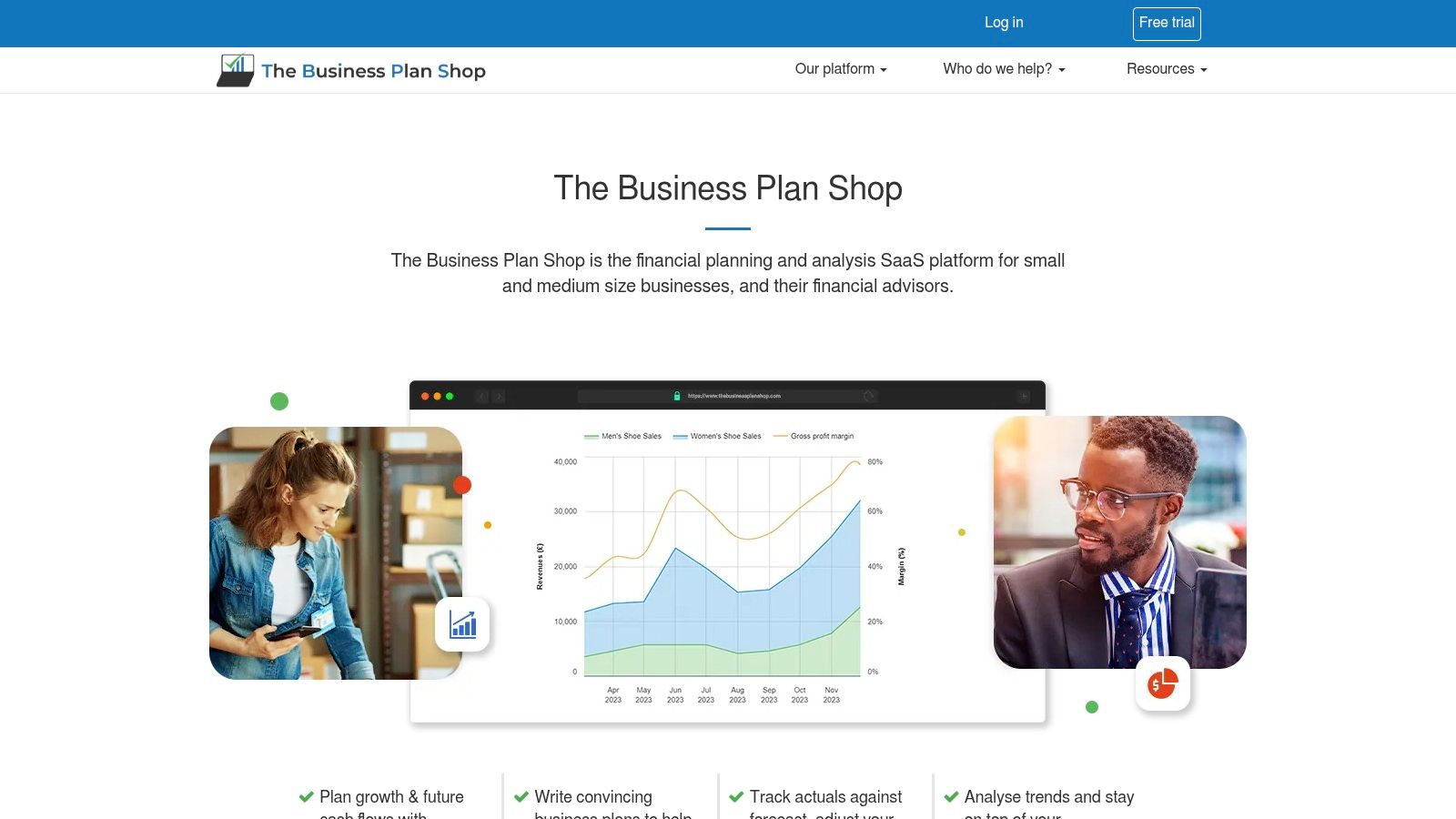
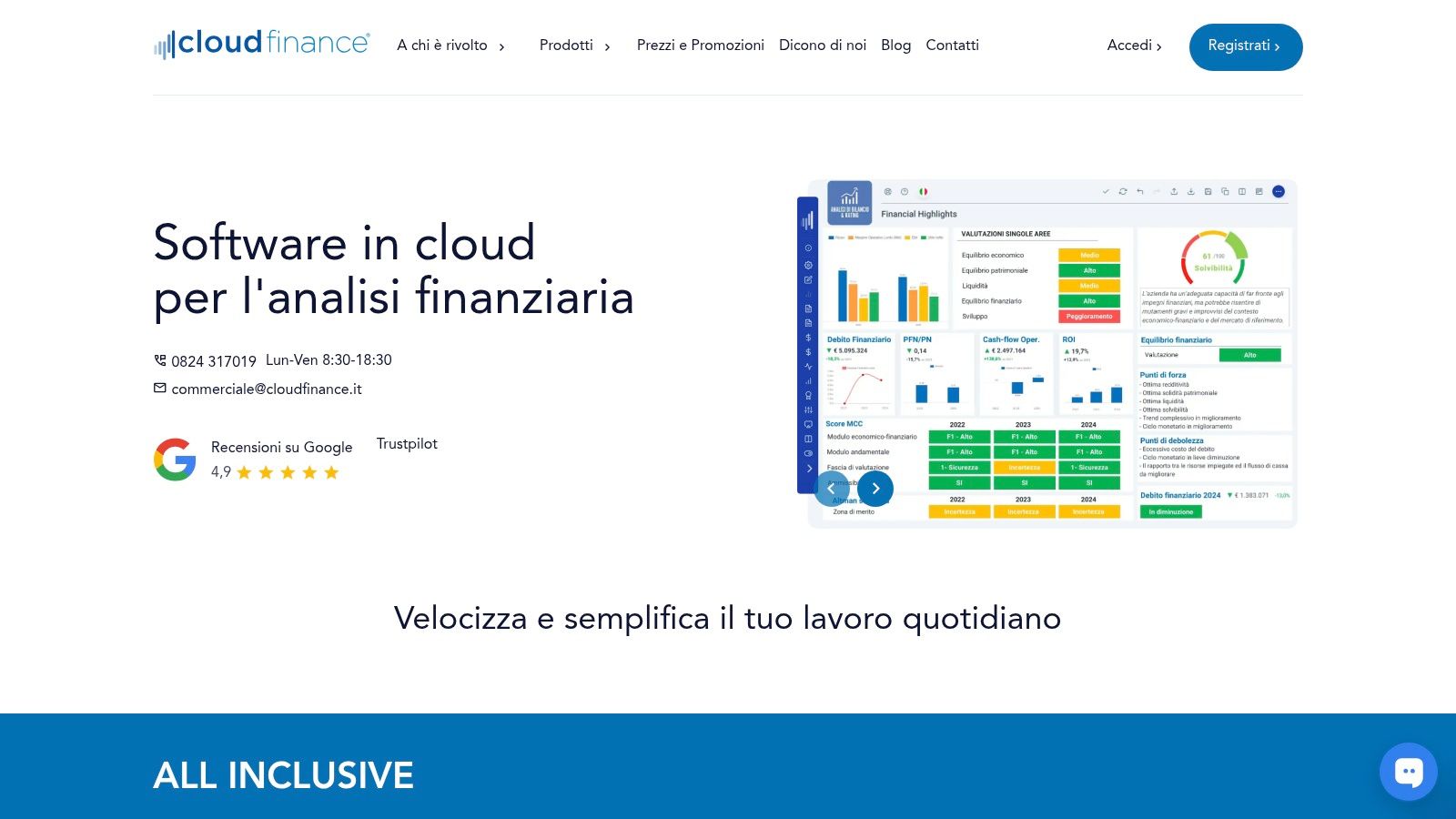
CloudFinance Business Plan Start Up has a simple but important strength: it doesn’t pretend that the Italian context is the same as the American one. This makes a big difference depending on whether your business plan is intended for a bank, Invitalia, a regional grant program, or a consultation with a local advisor.
Many international software programs are good at guiding you, but they aren't designed for Italian documentation requirements. CloudFinance, on the other hand, speaks that operational language—not just the language of the interface, but the language of the process.
If you need to produce financial and economic documents tailored to Italian audiences, this solution is better suited than many general-purpose tools. Support in Italian is also important, especially if you don’t have an in-house CFO and rely on an accountant for assistance.
It's a sensible choice when:
The downside is that the interface can be a bit overwhelming. If you don't already have a basic understanding of accounting or planning logic, you might find it feels more like a professional application than a quick-and-easy business plan app.
Here, the advice is pragmatic. Choose this option if your challenge is “I need to present a plan in the Italian context.” Don’t choose it if your challenge is still “I need to figure out if the business makes sense.” In that case, you need strategic work first—not just a document template.
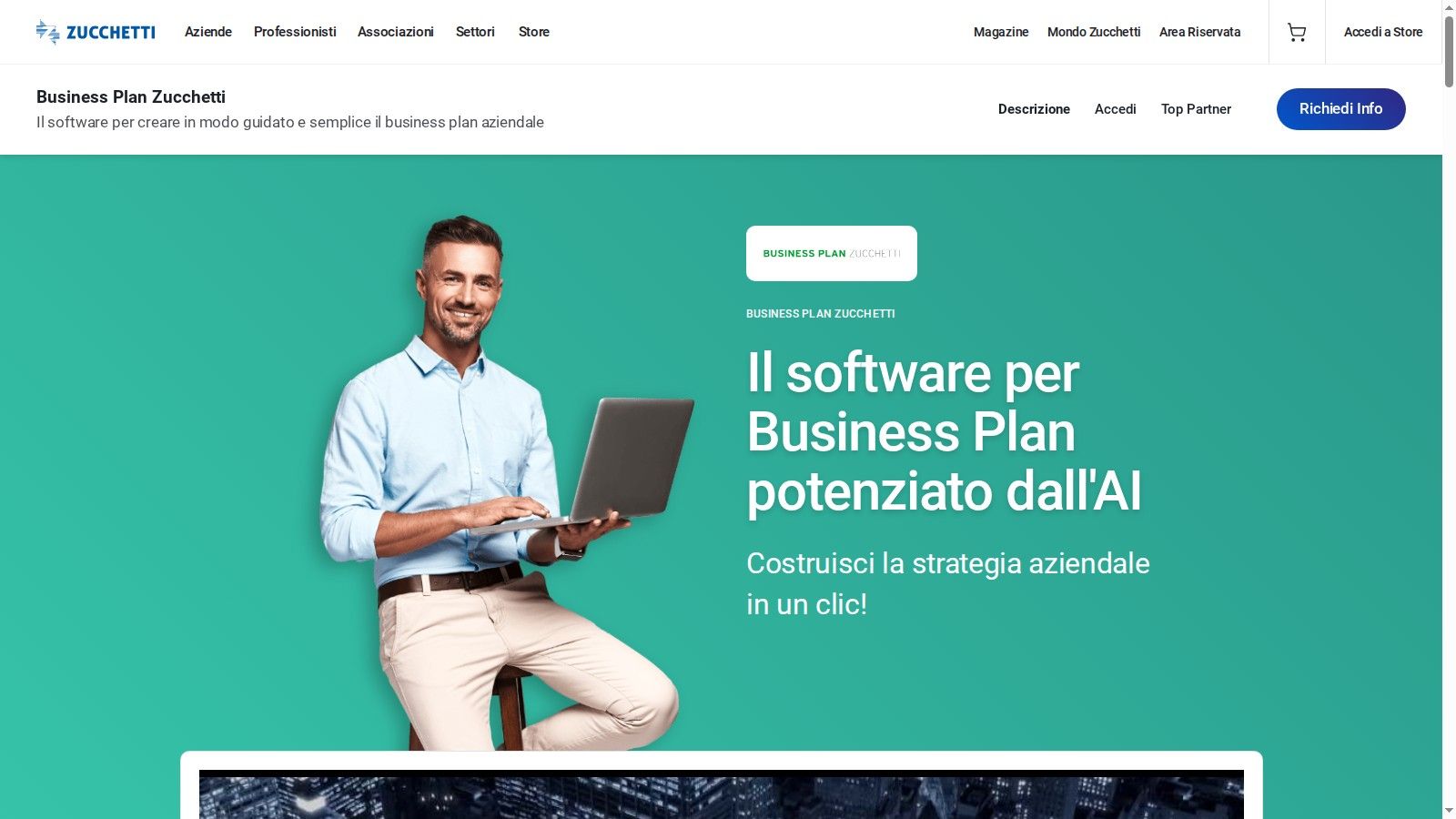
Zucchetti Software Business Plan only makes sense if you’ve already moved past the stage of vague ideas. Here, you’re not looking for a document generator to help you fill in predefined chapters. You’re choosing a tool that tries to bring together the assumptions, numbers, and logic of the plan in a more structured way.
It's a difference that matters.
A credible business plan—especially in Italy—is not judged by the PDF’s graphic design. It is judged by the soundness of its assumptions, the consistency between the descriptive section and the income statement, and the ability to explain why certain numbers are expected to materialize. Zucchetti is more on this side of the table.
I consider it suitable for companies that already have a basic internal structure, or that work with an accountant, controller, or external CFO. In these cases, the value lies not in “getting the plan done sooner,” but in reducing errors between versions and making the assumptions behind the numbers easier to understand.
In short, the key points are as follows:
This is where the real difference between business plan apps becomes clear. Some produce a well-organized document. Others help you check whether the plan holds up. Zucchetti falls more into the second category, although it requires more attention during the setup phase.
The real cost, however, is complexity. For a microbusiness, a solo founder, or someone who is still figuring out their business model, it can be too much to handle. You risk investing time in formalizing a plan before you’ve validated the fundamentals.
That’s why I’d consider it when the business plan is meant to be a serious working tool, not just an attachment to be thrown together quickly. If you need to present credible numbers and want a more controlled environment than a standard template offers, it remains one of the most sensible options available in Italy.
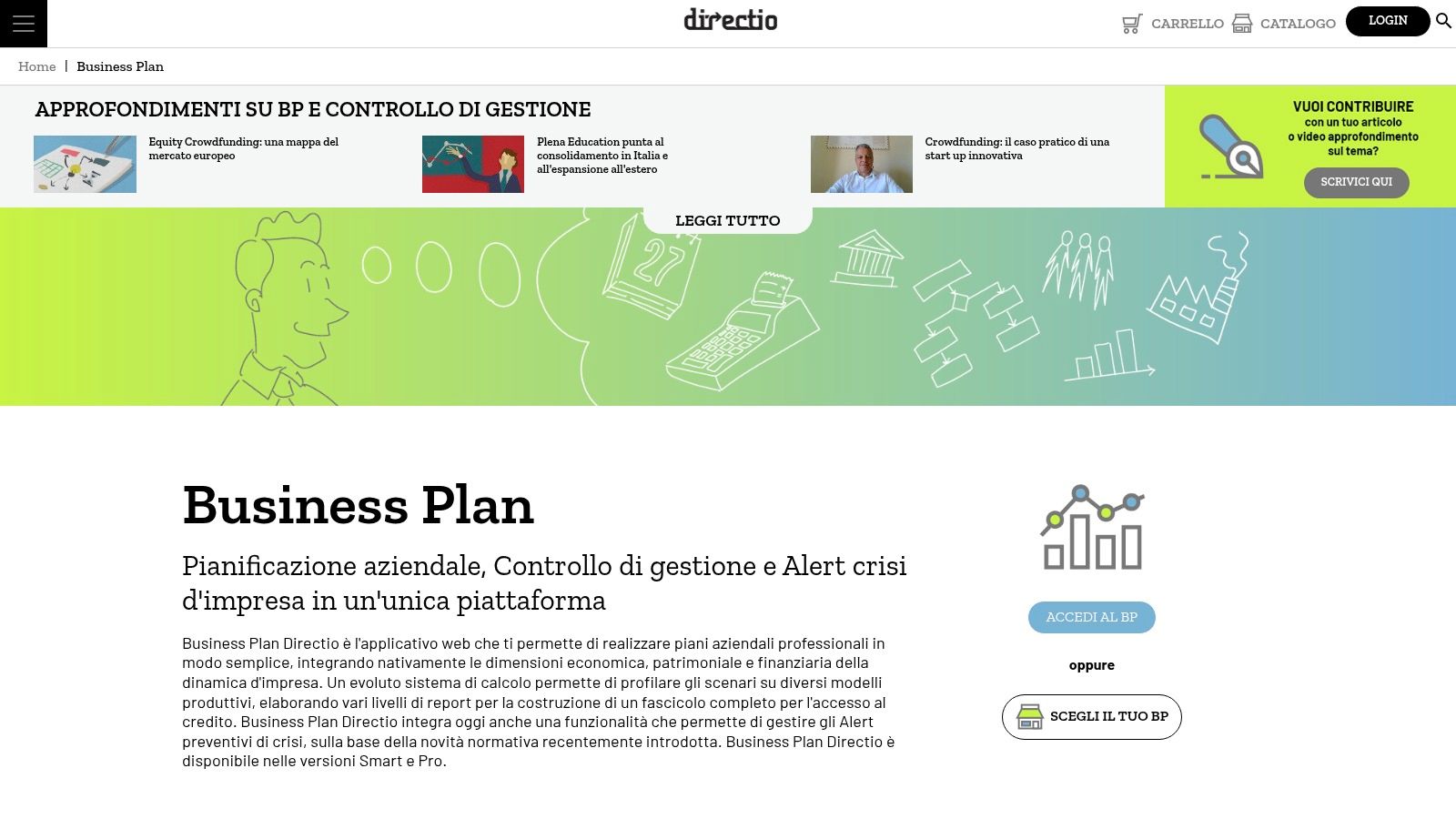
Directio Business Plan stands out for a specific approach. It does not treat the business plan as a standalone document, but links it to management control and early warning signs of business crises. This approach is very Italian, and in this case, that’s a good thing.
For many SMEs, the plan isn't designed to attract investors. It's designed to secure credit, demonstrate economic and financial sustainability, or prevent imbalances that could later turn into serious problems. Directio operates within that scope.
I would consider it especially if the business plan isn't a one-time exercise, but part of an ongoing financial management process. This makes it more appealing to existing businesses and professionals who work with multiple companies.
It makes sense if:
A good plan doesn't just tell you where you want to go. It also alerts you when the numbers are heading in a different direction.
The downside is that the interface and language are geared more toward professionals than aspiring founders. This isn’t a flaw, but rather a niche focus. If you’re looking for a simple tool to organize an idea, there are more lightweight options. If, on the other hand, you want a business plan app that really delves into financial management, this one is more comprehensive than average.
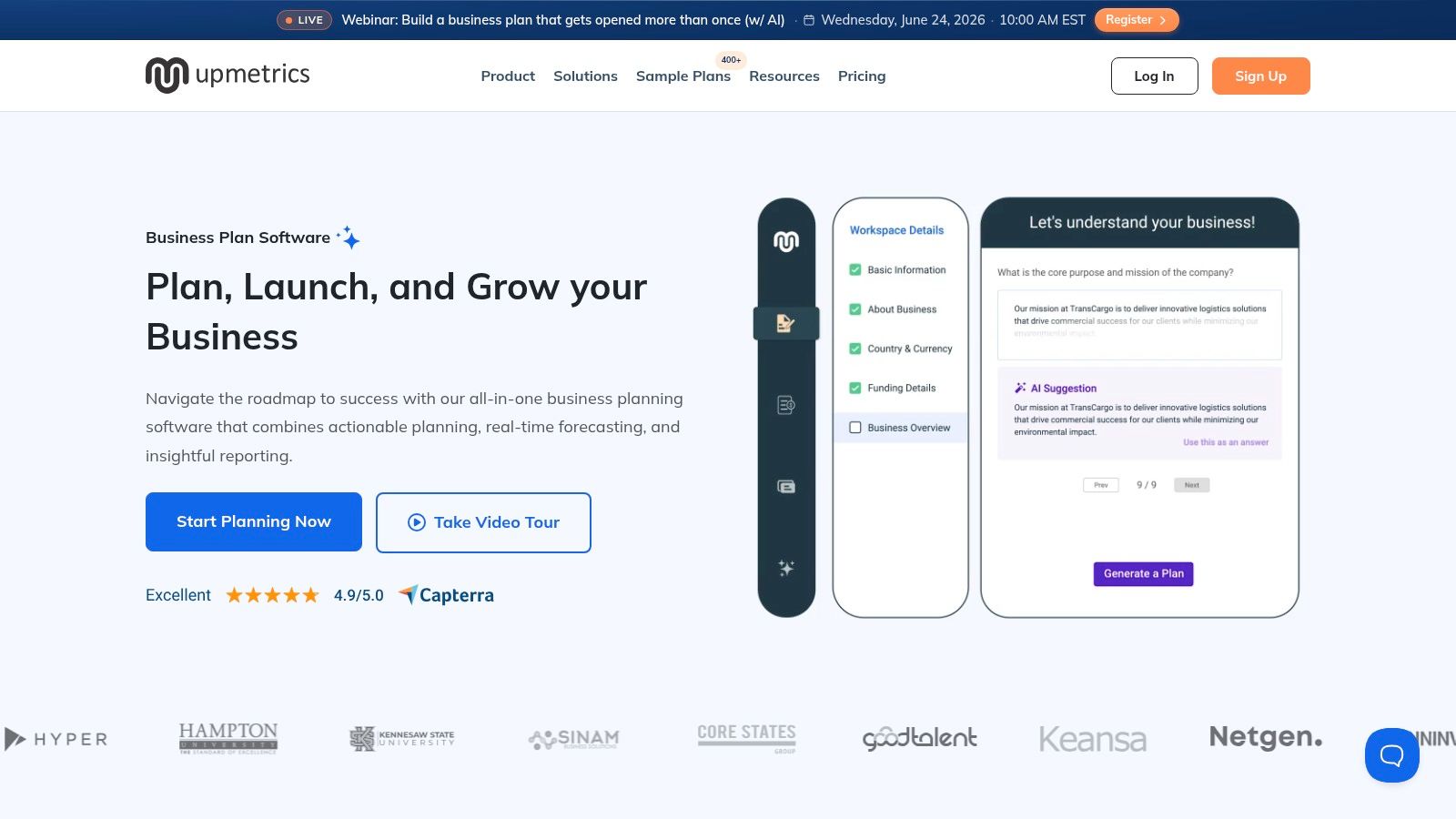
Upmetrics falls somewhere between a traditional guided generator and a more modern platform featuring AI, collaboration, and an extensive library of templates. It’s a smart compromise, as long as you use it with discipline.
The interface helps. Templates help. Even AI-assisted text and pitch generation can speed things up considerably. But don't kid yourself. If you let the AI do too much of the writing, you run the risk of ending up with a business plan that's generally correct but specifically weak.
Upmetrics is a good fit for small teams that want a single platform for planning, pitching, and forecasting, without having to jump right into more specialized tools. For consultants and advisors, the collaboration and white-label features can also be useful.
It convinces me in these scenarios:
The limitation is the same as that of almost all business plan apps with a generative AI component. They speed up the writing process more than they do the thinking. This is useful if you already have the answers and want to present them more effectively. It’s dangerous if you’re hoping the tool will come up with the strategy for you.
Basically, Upmetrics is a good accelerator. It’s not a substitute for validation. If you have a clear idea of what you’re building, it can save you time. If you don’t, it will mainly result in speed but little substance.
IdeaBuddy is one of the few tools that aims to guide you from idea to plan in a fairly straightforward way. This makes it suitable for those who are still in the planning phase and don't need a sophisticated financial framework right away.
The interface is modern, the user experience is more streamlined than that of some professional software, and the fact that it's available in Italian lowers the barrier to entry for many users.
I think it's a good fit for first-time founders, student entrepreneurs, incubators, and teams that are still refining their business model before formalizing it. The value lies not so much in the final document as in the logical progression it requires.
For example, it helps when you need to:
There is a limit to what can be predicted. When you get into serious financial matters—especially banking transactions, tenders, or planning for an established small business—you need more advanced tools or external analytical support.
The difference here is clear. IdeaBuddy helps you stay on track. However, that’s not enough if you need to back up economic forecasts with data, assumptions, and rigorous scenarios. It’s a good starting point. As a definitive solution, it depends largely on who will be reading the plan.
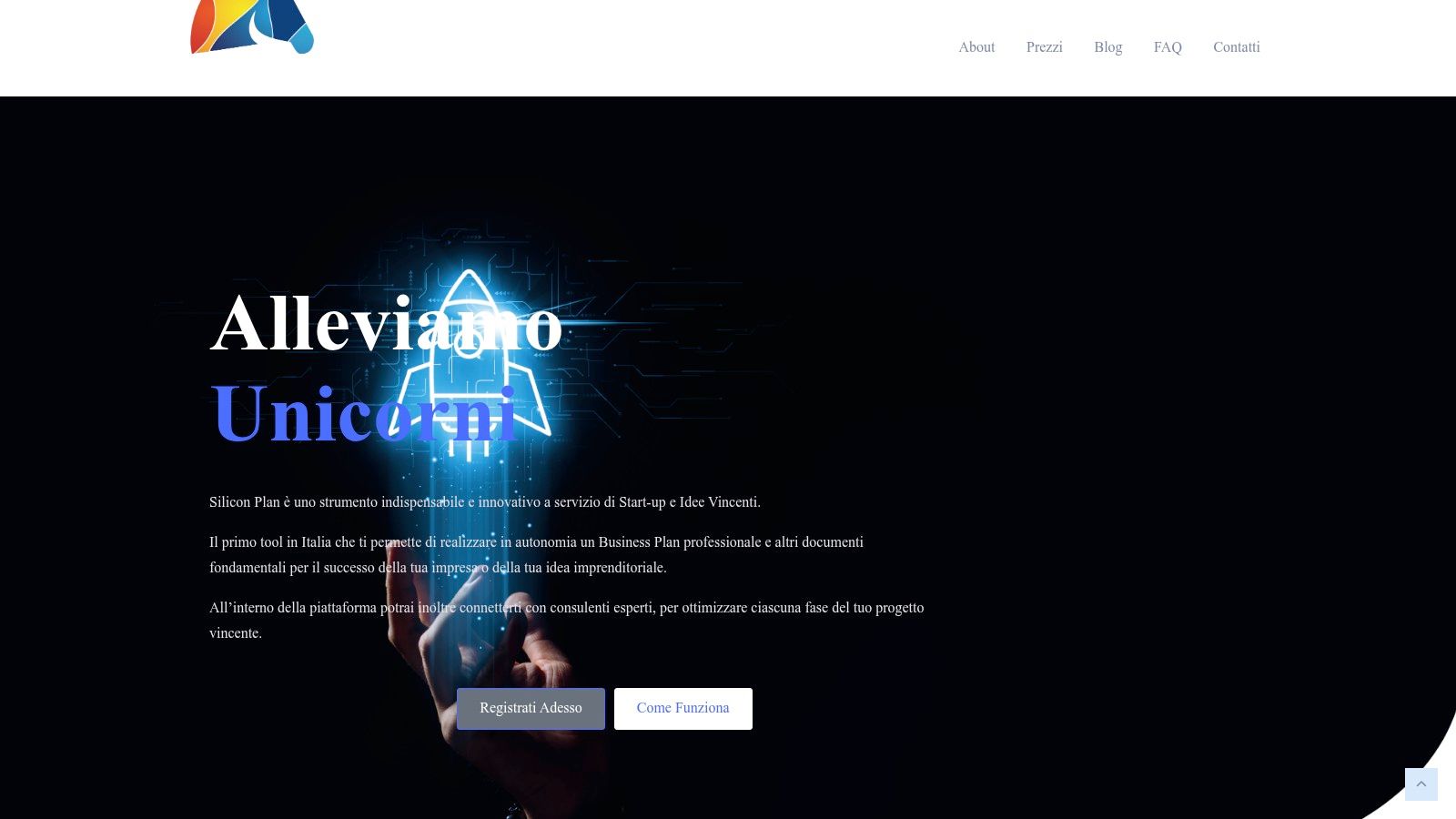
Silicon Plan is interesting because it doesn't try to solve everything with software alone. It combines a guided workflow, AI, exportable documents, and a marketplace for consultants. This hybrid approach makes sense, especially for those who already know that, on their own, they risk creating a plan that is formally sound but conceptually flawed.
Essentially, it buys you time and access to human support—not just features.
For Italian startups and early-stage projects, the idea of being able to develop a business plan, a business model canvas, and a pitch deck all in the same environment—and then seek help from an expert—is more realistic than many “do-it-yourself” promises.
I would consider it if:
The risk is that the final outcome also depends on the quality of the consultant you meet. So the platform alone isn't enough. Who you find on the other end matters a lot.
Some founders don't need better software. They need someone to test their assumptions before the market does.
Silicon Plan isn't the best choice for a traditional SME that needs to produce a plan that closely adheres to standard banking requirements. But for the Italian startup ecosystem, it's a more flexible option than it might seem at first glance.
Google Sheets and Excel templates remain, in many cases, the best choice. Not the most convenient—but the best. Especially when your business model doesn't fit well within the framework of guided software.
Working in a spreadsheet has one advantage that business plan apps often take away: it forces you to really see how the numbers work—drivers, formulas, dependencies, sensitivity analysis. You can’t hide behind a template.
If you know how to model well, you have total control. If you don't, you can cause damage quickly. That's the real trade-off. Not aesthetics.
Excel or Sheets are ideal when:
Pre-configured Excel spreadsheets can also help you get started more quickly, but the point remains the same: a spreadsheet is only powerful if the person creating it understands what they're doing.
Another aspect that is often underestimated is data integration. For medium-to-large Italian companies, integration and ERP systems account for an average of 3% to 5% of annual revenue, while the data integration market is estimated at $15.24 billion in 2026 and $47.60 billion by 2034 , according to an analysis by Integrate.My take on the adoption of data integration in businesses. In short: the value isn’t just in the spreadsheet. It lies in the ability to populate it effectively.
Excel and Google Sheets won't write your business plan for you. And that's a good thing. When used properly, they force you to think. And that remains one of the rarest qualities.
| Tool | Key Feature | User Experience / Quality | Unique Selling Proposition (USP) | Ideal Target | Price / Model |
|---|---|---|---|---|---|
| ELECTE (recommended) | Data-driven financial forecasting, autonomous AI agent, accounting integration | Visual reports, accessible to non-technical teams, continuous monitoring | AI agent that monitors trends and anomalies, realistic forecasting, GDPR (DE) | Companies with historical data, finance and retail, teams ranging from small to enterprise-level | Scalable pricing (Starter → Enterprise) |
| LivePlan | Guided Editor, Forecasts, and Industry Benchmarks | Intuitive dashboard, many examples, step-by-step guide | "Lender-ready" plans, extensive library of templates | Small Businesses and Those Seeking a Bankable Plan | SaaS Subscription (Paid Plans) |
| Strategyzer (Lean Canvas) | 1-page canvas for hypothesis validation | Collaborative interface, very concise | It forces clarity; excellent for early validation | Early-stage startups, innovation teams | Tool/methodology (subscription/paid tools) |
| CloudFinance – Startup Business Plan | Guided Italian Course, Bankable Outputs | Support in Italian, resources, and advice | Localization for Italian bureaucracy and banking procedures | New Italian companies and startups participating in calls for proposals | Temporary Licenses (1–12 months) |
| Zucchetti – Business Plan Software | Business Planning with Transparency on Drivers | Robust solution, AI integration for storytelling | Recognized brand, support, and consistency across modules | Medium- and large-sized companies and consultants | Price upon request (contact sales) |
| Directio – Business Plan | BP + management control + crisis alerts | Professional interface; requires onboarding | Compliance with Crisis Alerts (Italian Regulations) | Accountants, compliance-focused companies | Price upon request |
| Upmetrics | AI generator for pitch and tone, forecast | Good balance between gameplay and customization | White-label solution for consultants, extensive template library | Consultants, SMEs, and teams looking for ready-made templates | Multi-level plans (advanced features in higher-level plans) |
| IdeaBuddy | End-to-end suite: concept → plan → pitch | Modern interface, step-by-step guide (IT) | Covers concept development and validation through to the plan and pitch | Early-stage founders, incubators, schools | Subscription with AI credits and plan limits |
| Silicon Plan | Guided Tour + Consultant Marketplace | Flexible, Free Plan for Testing Tools | A combination of software and on-demand consulting, marketplace | Italian startups seeking consulting support | Free + subscription + one-time option |
| Excel / Google Sheets Template | Maximum flexibility in financial models | Full control, but requires advanced skills | Fully customizable, very low cost | Financial experts, consultants, experienced users | Free (Sheets) or license/one-time (Excel) |
Choosing the right business plan app comes after a more important question: what do you really need the plan for? If you need it to clarify an idea, a Lean Canvas or a tool like IdeaBuddy may be enough. If you need it to present yourself well, LivePlan or Upmetrics can help you get started quickly. If you need it for an Italian bank, a grant application, or an SME that’s already up and running, localized tools or a more rigorous approach—such as those offered by CloudFinance, Zucchetti, Directio, or a model built in Excel—become more relevant.
The key point is something else entirely. A business plan that works isn't the longest one, nor is it the one with the best graphics. It's the one that holds up when someone asks you, "Why do you believe these numbers?" If you can't answer that, the app won't save you.
In practice, apps fall into two categories. The first generates documents. The second helps you think more clearly or better ground your numbers. The first are useful. The second make all the difference. Many founders invest too much time in the form because it’s more reassuring than questioning assumptions about demand, pricing, channels, and costs.
That's why the correct sequence is almost always this:
For established companies, this final step is the one most often overlooked. A business plan shouldn’t be shelved the day after it’s exported as a PDF. It should become a benchmark against which to compare actual data. If that doesn’t happen, you’ve simply written a document. You haven’t built a decision-making tool.
This is where ELECTE naturally comes in. It doesn’t replace your strategy, nor does it pretend to. It helps you with the most critical—and often improvised—part: using real data to generate more credible forecasts, analyze trends, build scenarios, and give your plan financial substance. In other words, it helps you stop writing what you hope for and start defending what you can prove.
If you want one final piece of advice, here it is: Feel free to choose an app that saves you time on the form. But hold yourself to a higher standard when it comes to substance. That’s where the quality of the plan is determined. And that’s where the quality of the decisions you’ll make later on is determined.
If you want to turn your company's data into more credible projections, try ELECTE, an AI-powered data analytics platform for SMEs. It's the most practical way to make your business plan less narrative-driven and more decision-oriented.

.svg)


.svg)
.svg)