
A client writes to you and asks for a copy of the data they’ve entrusted to you over the years. They want to take it elsewhere. If you run an SME, this request can create immediate friction: Who will extract the data, in what format, by when, and how do you prevent errors or data leaks?
Data portability is often seen as just another privacy requirement. In reality, when viewed through the eyes of a business leader, it is much more than that. It is a testament to an organization’s maturity, a sign of transparency toward customers, and, in many cases, a tangible competitive advantage. A company that makes it easy to access data conveys order, reliability, and respect.
For an SME, this issue touches on compliance, internal processes, and strategy. If your data is disorganized, a data portability request will expose the problem. If, on the other hand, you’ve organized it well, that same request becomes an opportunity to strengthen trust and reputation. It’s the same principle that makes a well-structured data ecosystem—such as the one promoted by the AI-powered data for SMEs approach—so valuable: less operational chaos, clearer decision-making.
In this guide, you'll find a simple explanation, practical examples, and a step-by-step checklist to help you handle data portability without unnecessary technical jargon.
The word “portability” sounds technical. In practice, it means something very concrete: your customer shouldn’t feel trapped by your system.
When a person can retrieve their data and transfer it without unnecessary obstacles, they perceive your company as fair and modern. This changes the tone of the relationship. You’re not saying, “I’m keeping you in the loop”; you’re saying, “I’m treating you with transparency.”
For an SME, this approach has value that goes beyond the letter of the law. It reduces the chaos when a request comes in, forces you to organize your databases, and improves the quality of the information you use every day for sales, customer service, and analysis.
Data portability doesn't just reward those who are compliant. It rewards those who have clear processes.
Many business owners get stuck on three questions: What data do I need to provide? In what format? And who in the company is responsible for handling it? These are valid questions. If you address them properly, data portability stops being an administrative hassle and becomes a small operational superpower.
The most useful analogy is phone number portability. You switch carriers, but you don’t lose your number. With data portability, the principle is similar: a person can obtain the personal data they have provided to an organization and transfer it to another data controller.
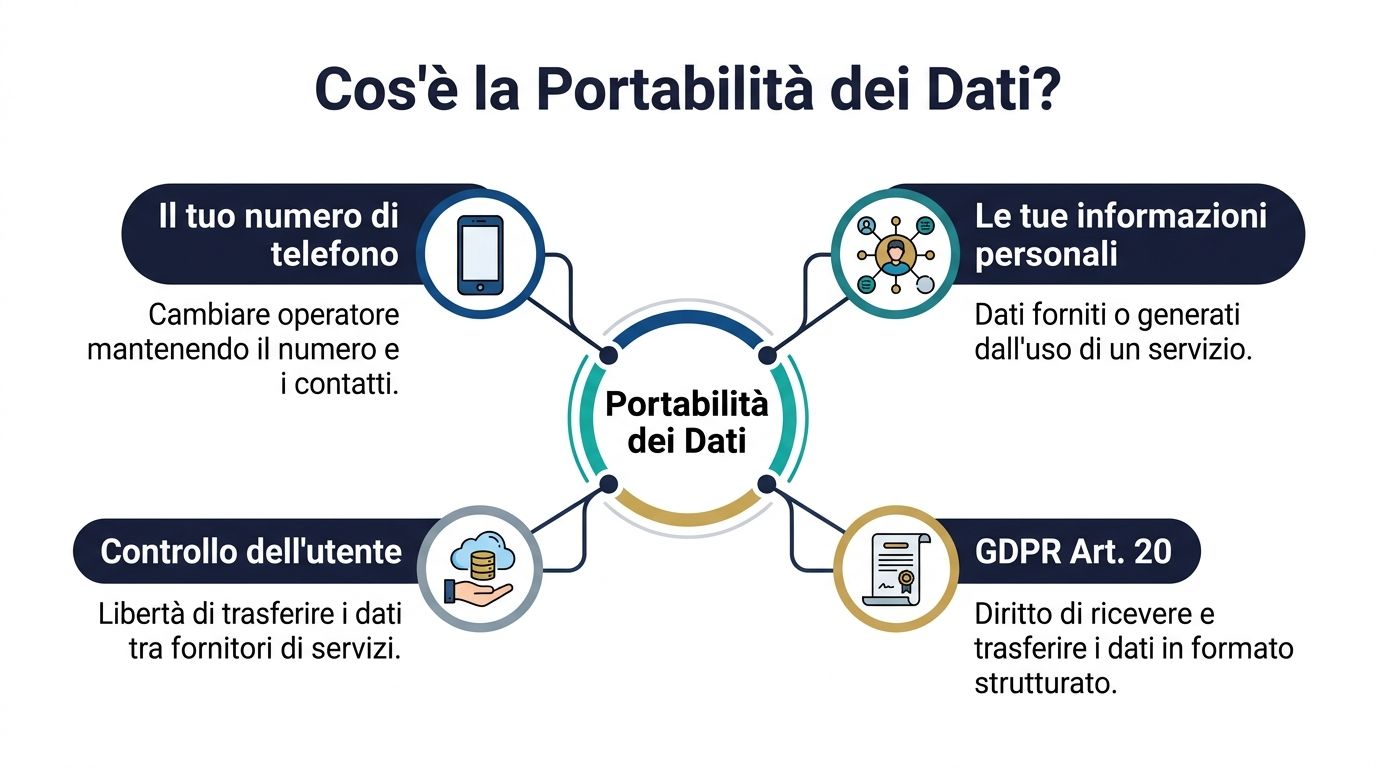
Under Italian law, this right is established by Article 20 of the GDPR, which took full effect on May 25, 2018, and the request must be fulfilled “without undue delay and, in any case, no later than one month” after receipt, as noted in this guide on the right to data portability.
This deadline has an immediate practical implication. You can't wing it when the request comes in. You need to have a procedure in place beforehand, along with internal roles and a reasonable way to extract the data.
This is where many people get confused. Not everything you “know” about a customer automatically falls under data portability.
Generally speaking, the following are included:
However, this does not include analyses you have created as the data controller, such as internal assessments, risk profiles, or other derived data. This point is very helpful in avoiding a common mistake: confusing customer data with the business analyses built on top of that data.
Rule of thumb: If the data is generated because the customer enters it or uses the service, it likely falls under the scope of portability. If it results from your internal assessment, it most often does not.
The legal basis is also important. The law applies when data processing is based on consent or the performance of a contract. To understand how an organization describes its data processing practices to users in a clear and understandable way, it can be helpful to look at concrete examples of privacy notices, such as how Brum handles your data.
The law doesn't stop at the principle. It requires that data be provided in a structured, commonly used, and machine-readable format. In practice, the file must be readable and reusable by another system without requiring anyone to retype everything by hand.
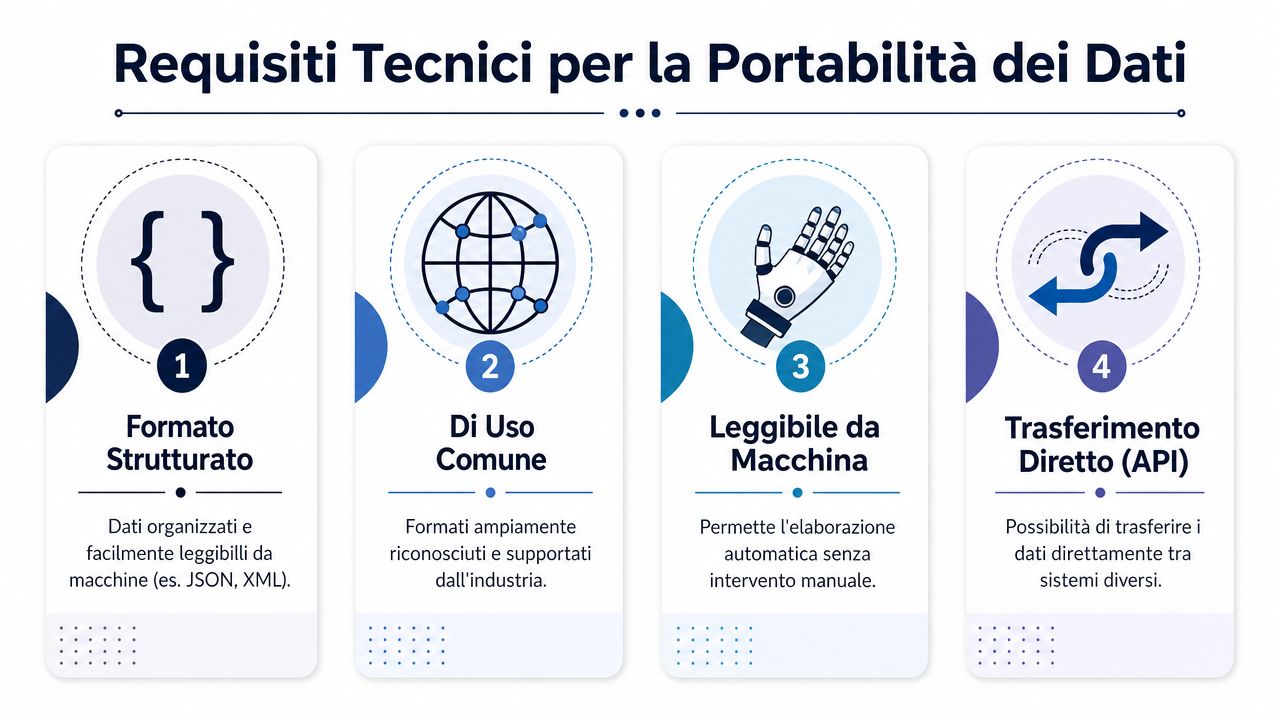
The formats most often cited as examples are CSV and JSON. A CSV file resembles a simple spreadsheet. Each row is a record, and each column is a field. JSON is more technical, but it’s very common in data exchange between web platforms.
According to this explanation of data portability, Article 20 of the GDPR specifically requires a structured, commonly used, and machine-readable format, such as CSV or JSON, and applies when processing is based on consent or the performance of a contract. The same source notes that this mechanism increases competition among digital service providers.
A quick distinction is more helpful than many definitions:
| Choice | It is portable | Why |
|---|---|---|
| Scanned PDF | No | It can be read, but it isn't easy to import into another system |
| Free Word Document | A little | It's easy on the human eye, but not so much for machines |
| CSV | Yes | It's simple, widely used, and easy to reuse |
| JSON | Yes | It's great when systems need to exchange data in an organized manner |
For many small and medium-sized businesses, a well-done CSV export is sufficient. It's the most realistic solution when the volume of requests is low and the team is small.
However, if you manage a digital platform, a marketplace, or a service with continuous data flows, it’s worth considering a more automated transfer. This is wherethe API comes into play—a channel that allows one system to communicate with another in a controlled and secure manner.
Think of the API as a dedicated service desk. Instead of asking someone to search for files and attach them manually, the system prepares and delivers the information in the required format.
For those who want to understand how this approach works in the context of modern integration, a useful resource is " ELECTE Now Available."

Most companies approach data portability with a defensive question: “How do I avoid problems?” It’s a legitimate question, but it doesn’t go far enough. The better question is: “How do I use this capability to make my service more credible and easier to adopt?”
A customer feels more confident when they realize they can come and go without any unnecessary friction. This perception matters a great deal in small and medium-sized businesses, where personal relationships are often a deciding factor.
Transparency here has at least three positive effects:
If you make it easy to leave, you often make it easier to stay as well. Customers recognize companies that don't use complexity as a barrier.
Consider a specialized e-commerce site. A new customer comes from a competing platform and wants to quickly restore their preferences, order history, and profile data. If your onboarding process includes structured data imports, you’ll have a head start. You’re not just selling products—you’re lowering the cost of switching.
In a fitness SaaS platform, the ability to import workout data, habits, and progress can make the transition much smoother. Users don't have to start from scratch. And starting from scratch is one of the main reasons people put off switching services.
In the professional services sector, data portability can improve communication with clients. A firm, private school, consulting platform, or training provider that delivers data in a clean, organized manner is perceived as more professional and more respectful.
Here's a practical way to rethink the issue:
SMEs that stop at the first level do only the bare minimum. Those that work on the second and third levels turn an obligation into a competitive advantage.
Ignoring data portability is dangerous not only from a legal standpoint. There is an immediate operational risk: when a request comes in, the team gets confused, the data is scattered, someone exports too much or too little, and the privacy issue also becomes a governance issue.
For an SME, reputational damage can be just as significant as regulatory damage. A customer who receives a slow, incomplete, or contradictory response is unlikely to describe the company as reliable.
This issue also touches on security. If the process is haphazard, it increases the likelihood of sending files to the wrong person, using insecure channels, or including information that should not have been disclosed.
Best practices aren't complicated. They're disciplined.
A well-executed porting process seems tedious. And that's exactly the point. It has to be repeatable, not a heroic feat.
It's also worth periodically checking to ensure that policies and internal communications are consistent. If you'd like to see an example of a page dedicated to data protection in a digital context, you can review our confidentiality policy.
To turn these best practices into routine, many companies implement a simple operational protocol that includes an initial check, retrieval, review, and delivery. You don't need a complex system. You need a procedure that the team can actually follow.
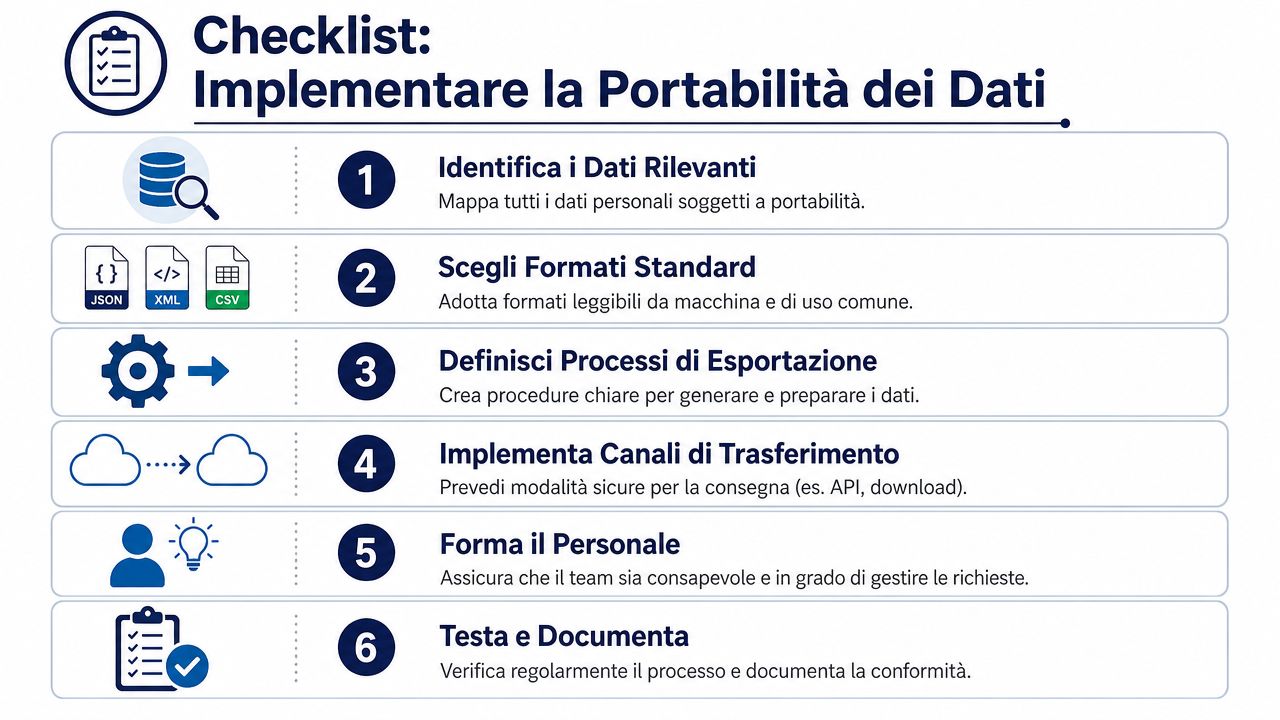
If you want to make data portability manageable, treat it as a lean operational project—not as a theoretical exercise.
The first step is a basic audit. You need to know what personal data you collect, where it is stored, and which processing activities are based on consent or a contract.
Be sure to check at least the following items:
SMEs often find that the problem isn't a lack of data, but rather that the data is spread across too many tools.
We need clarity here, not complexity. Describe the process from the moment the request is made through to final delivery.
Here's a simple example:
When it comes to technology, don't overcomplicate things too soon. A well-organized CSV file with clear headers is often the best way to get off to a good start.
Practical tip: If an exported file requires a twenty-minute phone call to be understood, it’s not quite ready yet.
Many companies document the process but never test it. This is a common mistake. Be sure to conduct at least one internal simulation using a realistic scenario.
During the test, pay attention to four aspects:
Training must be targeted. Customer service must be able to identify the request. IT must know how to export data. Those responsible for privacy and compliance must define the boundaries.
A basic checklist to keep handy during the process is very helpful:
If you want reliable data portability, documentation and hands-on experience are worth more than a long, rarely used manual.
When company data is scattered across spreadsheets, platforms, and manually generated reports, handling a data portability request becomes a time-consuming process. The problem isn't just privacy. It's fragmentation.
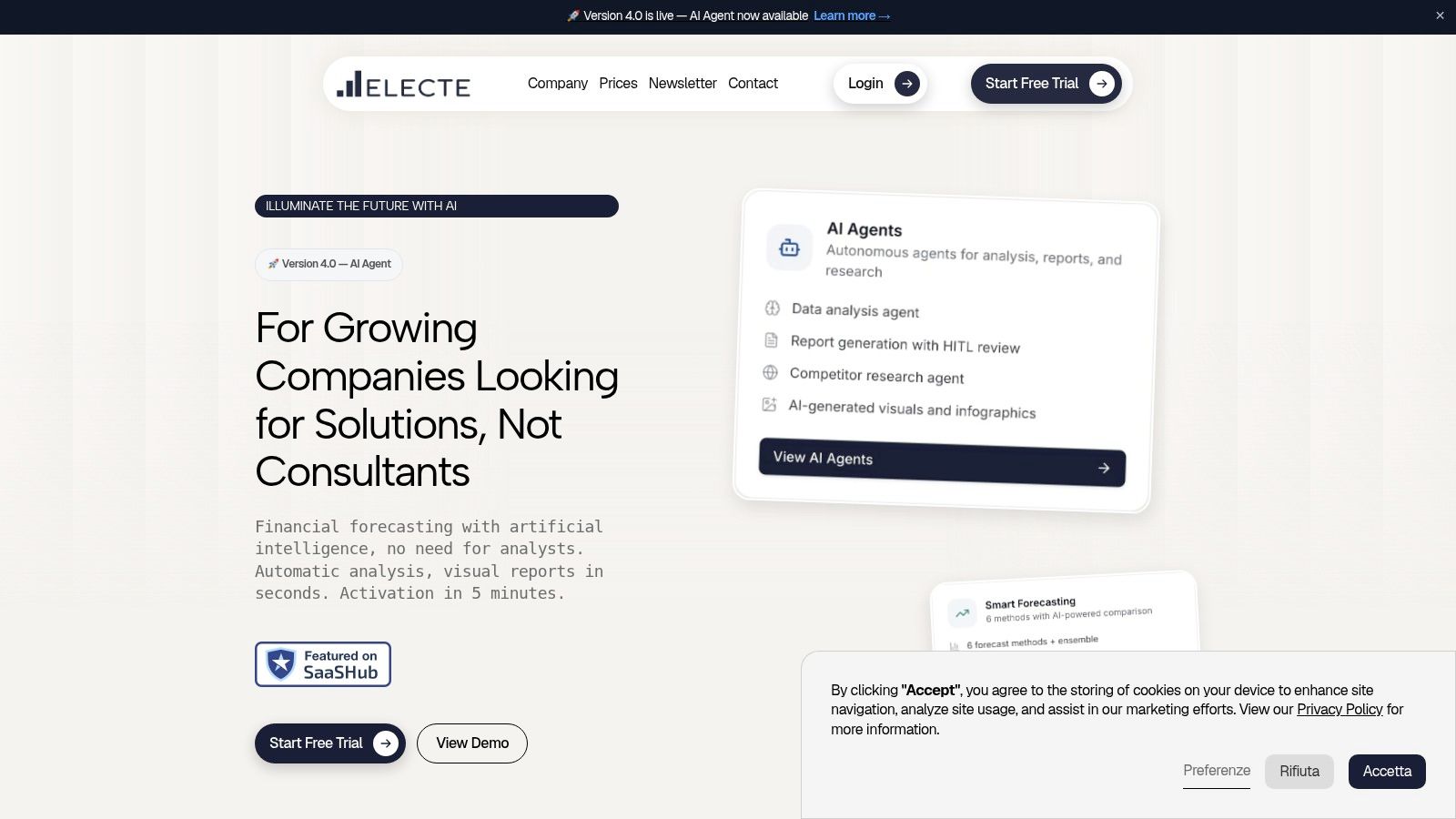
ELECTE, an AI-powered data analytics platform for SMEs, was created to centralize various data sources and transform them into actionable insights. In this context, data portability also becomes easier to manage, because the data is already more organized, more readable, and easier to isolate.
This point is particularly useful when you need to distinguish between what falls within the scope of data portability and what does not. The guidelines referenced in this document regarding the scope of the right to data portability clarify that the right applies to data “provided” knowingly by the data subject and data generated by the data subject’s activities, while it does not include derived data created by the data controller.
Let's consider the case of a retail SME that collects data from e-commerce, customer support, and marketing campaigns. Without a unified view, piecing together the correct set of data requires manual checks and comparisons across systems.
With a centralized data environment, work takes on a new form:
The value isn't just technical. It's managerial. A request that used to tie up different people for days can now be streamlined.
That’s why compliance often improves when data organization improves. Not because the platform “handles the GDPR on its own,” but because it makes it easier to do the work required by the GDPR properly.
Data portability starts as a right of the data subject, but for an SME, it quickly becomes a test of internal quality. If data is scattered, roles are unclear, and formats are haphazard, the request creates friction. If, on the other hand, you have order, rules, and the right tools in place, that same request strengthens trust and reputation.
The key point is this: compliance isn't separate from business. When you organize data portability effectively, you also improve processes, service, and your ability to use information more intelligently.
These guidelines are not a substitute for legal advice regarding your specific case. Privacy regulations must be applied based on your actual data processing activities, the systems you use, and the industry in which you operate. However, one thing is universal: companies that manage data well make better decisions and build stronger relationships.
The future belongs to companies that are transparent, fast, and well-organized.
If you want to turn scattered data into clear insights and more manageable processes, check out ELECTE. It’s an AI-powered data analytics platform designed for SMEs that want faster decision-making, automated reports, and a more structured database. Ready to transform your data? Start your free trial →

.svg)


.svg)
.svg)




.webp)