

Do you want to launch a new product, optimize your pricing, or better understand your customers? Instinct can take you far, but only so far. To grow in a competitive market, you need certainty. Market research bridges the gap between intuition and data-driven decisions—it’s a strategic tool that lets you act with confidence. Today, thanks to artificial intelligence, it’s no longer a luxury reserved for large corporations, but a competitive advantage accessible to every small and medium-sized business. This guide will show you how to turn data into actionable insights, reducing risks and uncovering growth opportunities you didn’t know you had. You’ll learn practical methods, accessible tools, and concrete steps to conduct your first effective market research—even without a dedicated team of analysts.
Imagine having to navigate unfamiliar territory. Would you ever set out without a map? Market research is the strategic roadmap for your business. It’s not a luxury reserved for multinational corporations with million-dollar budgets, but a vital tool for competing and growing—especially for SMEs.

Forget about commissioning expensive studies from large agencies. Conducting research today means maintaining an ongoing dialogue with your customers and closely monitoring what’s happening in your industry.
Every business decision—from launching a product to running an advertising campaign—involves some risk. Market research is your safety net: it helps you drastically reduce uncertainty and avoid costly missteps.
Think of specific scenarios:
But it’s not just about defense. A careful analysis can reveal opportunities that your competitors are overlooking. You might discover an unexpected customer segment or an unmet need that no one is addressing.
Until a few years ago, in-depth data analysis was the exclusive domain of those who could afford teams of specialists and substantial budgets. Today, that is no longer the case. AI-powered data analytics platforms, such as ELECTE, have changed the game. They transform complex data into clear, actionable insights—without you having to write a single line of code.
In Italy, for example, market research can draw on a vast wealth of information.Istat provides essential demographic, social, and economic data. Access to this data gives you a key competitive advantage in identifying high-potential market segments.
A data-driven approach is no longer an option. It is the foundation for sustainable growth. Replacing instinct with insights allows you to act with confidence and precision.
To understand the impact of this paradigm shift, one need only compare the two approaches.
This table highlights the difference between decisions made on a hunch and those backed by concrete analysis, showing how market research increases ROI and reduces risk.
| Decision-Making Area | Instinct-Based Approach | Data-Driven Approach (Including Market Research) |
|---|---|---|
| Product Launch | "I think you'll like this product." | " 75% of the customers surveyed expressed strong interest and would pay X." |
| Marketing Campaign | "We target everyone between the ages of 25 and 45." | "Our most profitable demographic is women aged 30–35 who are active on Instagram in the evenings." |
| Geographic Expansion | "Let's open a location in that city; it seems like a vibrant place." | "The data shows strong demand and little competition in that specific area." |
As you can see, moving from intuition to data means turning hopes into measurable certainties. It’s no longer a matter of taking a gamble, but of investing with a clear strategy.
There is no single “right” way to conduct market research. Imagine you have a toolbox: each tool serves a different purpose. Choosing the right one—or the most effective combination—is the first step toward turning an idea into a growth strategy that actually works.
The choice depends on just one thing: your goals. Do you want to track a broad trend or delve deep into a customer’s emotions? Do you need new data, or can you build on information you already have? Answering these questions will point you in the right direction.
Quantitative research speaks the language of numbers and statistics. It’s like conducting a survey of your customers to get a clear and measurable picture of the market. The goal is to provide precise answers to questions such as:
This approach is based on large-scale surveys and the analysis of existing data, such as transaction data. It is the perfect tool for confirming a hypothesis and gaining a reliable overview.
While quantitative research measures, qualitative research explores. While the former tells you what’s happening, the latter reveals why. Think of an in-depth conversation with a small group of trusted customers to uncover the emotions, motivations, and frustrations that drive their choices.
Qualitative research won’t give you percentages, but it will provide stories and context. It will help you understand why a customer chooses you over a competitor, or what really holds them back when using your product.
The most effective methods here are one-on-one interviews, focus groups, and a careful analysis of online reviews or social media comments. This approach is essential for uncovering needs that customers themselves aren’t even aware of and for generating completely new ideas.
Another key distinction lies in the source of the data. The choice between primary and secondary research is a strategic one: it depends on your budget, the time available, and how specific your questions are.
Primary Research ("Fresh" Data)
This involves collecting entirely new data, tailored specifically to your project. You are the one who generates the information you need.
Secondary Research (Existing Data)
This is the art of finding hidden treasures in data that already exists. Instead of creating new information, you leverage what’s already available—often at no cost.
The most effective approach is almost always a smart combination of methods. You might start with secondary research on your sales history (the "what") to identify a decline in a particular customer segment. From there, you can conduct qualitative interviews (primary research) to understand the "why."
AI-powered platforms like ELECTE designed precisely for this purpose: to analyze and make sense of all these sources, transforming raw data—both quantitative and qualitative—into insights ready to inform your next decision.
Putting theory into practice is much easier than you might think. You don’t need a multinational corporation’s budget or an army of analysts to launch an effective market research campaign. All you need is to know the right methods and make use of tools—often free or low-cost—to start engaging with your market and collecting data that makes a difference.
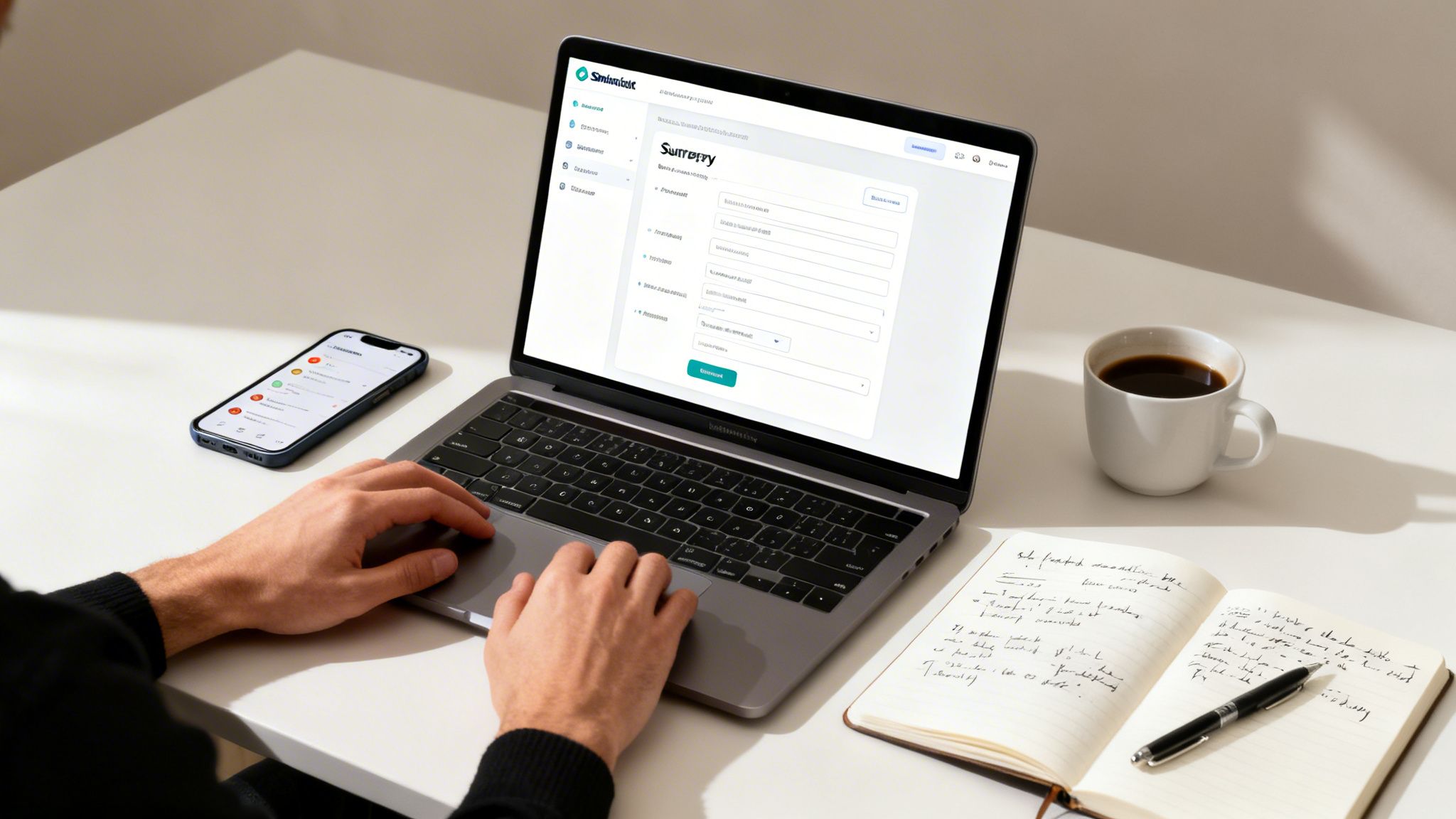
Let’s take a look at four practical approaches that any SME can implement right away, transforming data analysis from a complex task into a tangible competitive advantage.
Surveys are one of the most direct ways to collect quantitative data. Platforms like Google Forms, Typeform, or SurveyMonkey let you create and distribute surveys in just a few minutes via email, social media, or your website.
The secret, however, lies not in the tool, but in the questions. To get honest and useful answers, there are a few golden rules:
In Italy, online surveys are a well-established practice for SMEs, especially in retail and e-commerce. They help identify demographic data and purchasing habits, which are key factors in understanding local preferences and staying competitive. To learn more about how to design an effective survey, you can find useful insights on market research through surveys on SurveyMonkey.
While surveys tell you the "what," interviews reveal the "why." A 15- to 20-minute conversation with a customer—even if it’s just over the phone or via video call—can be worth more than a hundred survey responses. It’s a unique opportunity to dig deeper and uncover needs they didn’t even know they had.
You don’t need to interview hundreds of people. All it takes is 5–10 conversations with selected customers (both enthusiastic ones and those who are less satisfied) to identify recurring patterns and problems that need to be solved.
Your goal isn't to sell, but to listen. Ask open-ended questions like "Can you tell me about the last time you used our product?" or "What almost kept you from buying from us?" The answers might really surprise you.
What are people saying about your brand, your products, or your competitors when you’re not there? Social listening is the art of finding out. In practice, it means monitoring public conversations on social media, blogs, and forums to identify mentions, opinions, and emerging trends.
Tools like Google Alerts (free) or more specialized platforms allow you to track strategic keywords. You can monitor:
It’s like having a focus group that’s active 24/7, providing you with a constant stream of spontaneous, unfiltered feedback straight from the market.
Often, the richest goldmine is already within your company. Transactional data—that is, the history of purchases and interactions stored in your CRM, e-commerce system, or even simple Excel files—is an invaluable source of truth.
When analyzed properly, this data can provide answers to crucial questions:
The problem is that this data is often raw, disorganized, and difficult to interpret for anyone who isn't an analyst. And this is exactly where a platform like ELECTE acts as an “automatic translator.” By connecting directly to these sources, its AI analyzes the numbers and transforms them into clear charts and strategic insights, without requiring you to be a data expert. If you’re interested in learning how to design tests to validate your hypotheses, you can explore the topic further by reading our article on experimental design.
We’ve explored methods for collecting data, but the real challenge lies elsewhere: how do you turn that flood of raw information into strategic decisions? Until recently, this process required expert analysts and a significant amount of time. Today, an AI-powered data analytics platform like ELECTE—an AI-powered data analytics platform for SMEs—acts as your personal strategic analyst, finally making market research accessible, fast, and effective.
Think of ELECTE as software, but as a partner working for you. The entire process has been designed to be intuitive, breaking down any technical barriers. Your goal? To focus solely on what matters: business results.
The first step to unlocking value is connecting your data sources. ELECTE designed to make this process as seamless as possible. Forget about complicated import procedures: you can connect the data you already use every day with just a few clicks.
Think about the wealth of information you already have that often goes unused:
This ability to aggregate data from various sources is crucial. ELECTE data, creating a 360-degree view of your business that would be nearly impossible to achieve manually.
Once the data is connected, the real work of automation begins. One of the most time-consuming tasks in any analysis is "data cleaning": correcting errors, removing duplicates, and formatting the information consistently.
ELECTE this process. Its artificial intelligence scans, cleans, and organizes the data for you. This not only saves you an incredible amount of time, but also ensures that your analyses are based on solid, reliable data.
In practice, you can go from "raw" data to insights ready for analysis in just a few minutes, not days. AI handles the heavy lifting, leaving you to focus on what matters most: decision-making.
This brings us to the heart of ELECTE value. Once set up, the AI doesn’t just show you the data—it analyzes it for you. It actively looks for correlations, trends, and anomalies that the human eye might miss. This is where market research becomes a predictive and proactive tool.
Here are some practical examples of what ELECTE AI can do ELECTE your business:
Imagine being able to ask the platform a direct question, such as "Show me the profiles of my top customers," and receive a visual, interactive dashboard in response. For anyone who wants to view this data, it’s essential to learn how to create effective analytics dashboards—a process that ELECTE much ELECTE .
In short, ELECTE just provide you with charts. It tells you the story behind your numbers. It transforms the complex process of market research into a simple yet powerful dialogue with your business, empowering you to act with the confidence that comes from fact-based decisions.
It’s time to put theory into practice. This practical guide will show you how to break down a process that may seem intimidating into a series of concrete steps. There’s only one goal: to give you the confidence to get started.
Research without a clear objective is like a ship without a course: a waste of time and resources. The first step is to formulate a specific, measurable question that you absolutely must answer.
Forget about vague goals like “I want to get to know my customers better.” Be specific.
Here are a few examples of goals that work:
A clearly defined goal sets the boundaries, helps you choose the right methods, and keeps you from getting lost in a sea of useless data.
Once you have your question, you need to decide how to find the answer. There is no single "best" method; there is only the one that works best for your specific goal.
Let's go back to the example of abandoned shopping carts:
The choice depends on the resources you have and the depth you need. Sometimes a single piece of data is enough; other times, you need a story.
You know what you want to find out and how you plan to do it. Now it’s time to get your tools ready. If you’ve decided to conduct a survey, you can use tools like Google Forms to create one in just a few minutes. If, on the other hand, you need to analyze data you already have on hand, pull reports from your CRM or e-commerce platform.
This is a critical step. The quality of your data will determine the quality of your results. "Dirty" or incomplete data will only lead to incorrect conclusions.
This is where the magic happens. Or, more often than not, where things come to a standstill. Manually analyzing spreadsheets is a task that can take days. This is where a platform like ELECTE completely change the game.
Artificial intelligence automates and accelerates this process, transforming raw data into strategic insights.
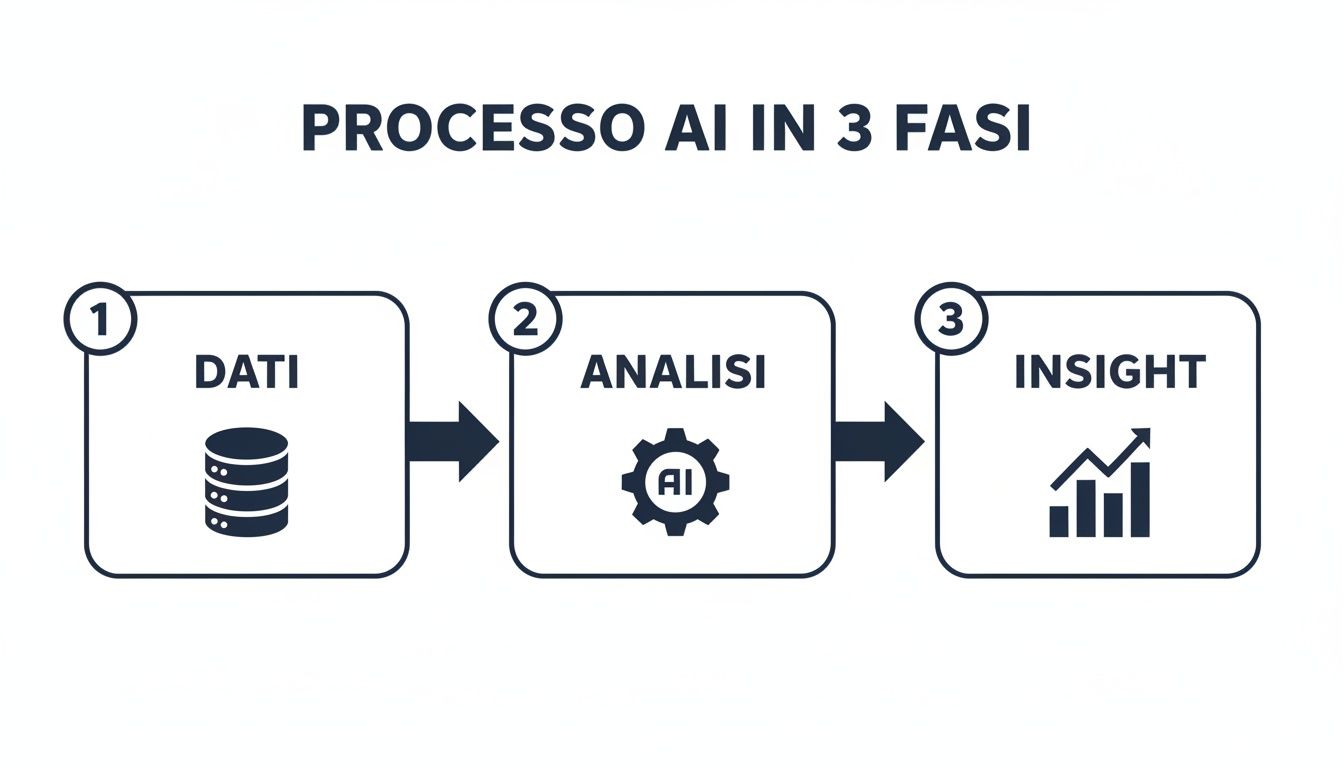
The process is simple: raw data is processed by intelligent algorithms that extract clear, ready-to-use insights.
Imagine uploading ELECTE CSV ELECTE containing cart abandonment data to ELECTE . Instead of spending hours creating pivot tables, the AI automatically analyzes everything and presents the results in interactive charts and reports that anyone can understand.
Realizing in just a few moments that 70% of cart abandonments occur on the shipping costs page is no longer just a statistic. It’s a revelation.
An insight is wasted if it doesn't lead to action. The final step is to use what you've discovered to make a decision. Did the chart reveal the problem? Great. Now you need to solve it.
Going back to the previous example, armed with that insight, you might decide to:
Every action must be measurable. This way, you can assess the impact of your decision and, if necessary, begin a new cycle of analysis. This is a virtuous cycle of continuous improvement, driven by data.
Here are the key points to keep in mind:
Market research is no longer a complex endeavor reserved for large corporations. Thanks to AI-powered tools and a pragmatic approach, every SME can now harness the power of data to reduce risks, optimize strategies, and uncover new growth opportunities. Replacing intuition with fact-based insights allows you to make better and faster decisions, building a lasting competitive advantage. It’s not about becoming a data scientist, but about learning to ask the right questions and using technology to find the answers. Shining a light on the future of your business is more accessible than ever.
Are you ready to turn your data into winning decisions? Try ELECTE →

.svg)


.svg)
.svg)