
You’re probably experiencing the same scenario I see in so many companies. You join a call, listen to the client, try to ask smart questions, and in the meantime, you jot down fragmented notes that you can’t fully make sense of by the end of the day. The problem isn’t your organization. It’s that taking notes by hand while actively participating in a meeting is double the work.
That’s why AI meeting transcription has become a concrete category, not just a novelty. It’s not just about producing meeting minutes. It frees up attention during the call and transforms scattered conversations into searchable material, summaries, action items, and useful insights for the business. Context matters in Italy as well: 29.7% of Italian SMEs are already implementing or have adopted AI to improve data processing and analysis, while an additional 38% are interested in introducing it, according to this analysis of AI strategies for SMEs.
What’s missing from most guides, however, is the truly important part. It’s not enough to just compare features. You need to understand which architecture alters the conversation the least, what trade-offs you’re making in terms of privacy, and which tool fits your workflow without forcing you to work unnaturally.

In an important meeting, the same thing always happens. Either you listen carefully, or you take good notes. In practice, almost no one manages to do both at the same time.
People who take notes by hand tend to write down only what seems important to them at that moment. The problem is that this filter is imperfect. It’s influenced by haste, recent memory, and the fact that while you’re writing, you miss what comes next.
Handwritten notes don't fail because they're slow. They fail because they decide too soon what matters and what doesn't.
Then, when the call ends, the second hidden cost kicks in. You have to piece together decisions, responsibilities, customer objections, implied deadlines, and half-spoken phrases that only become relevant days later. This is where AI meeting transcription truly transforms your daily work.
In recent years, the way online meetings are conducted has changed because platforms such as Zoom, Microsoft Teams, and Google Meet have introduced real-time automatic transcription features with timestamps and speaker identification, as described in this overview of AI-powered audio transcription. It is no longer necessary to treat transcription as a separate technical process.
In Google Meet, for example, the transcription feature may be enabled by default in many versions of Google Workspace; it displays a transcription icon visible to participants and automatically sends an email with a link at the end of the meeting, as explained in the official Google Meet documentation. This operational detail matters because it reduces friction.
In practice, the advantage isn't just having a script. It's finishing the call with material that's already structured, which you can quickly review instead of rewriting everything from scratch.
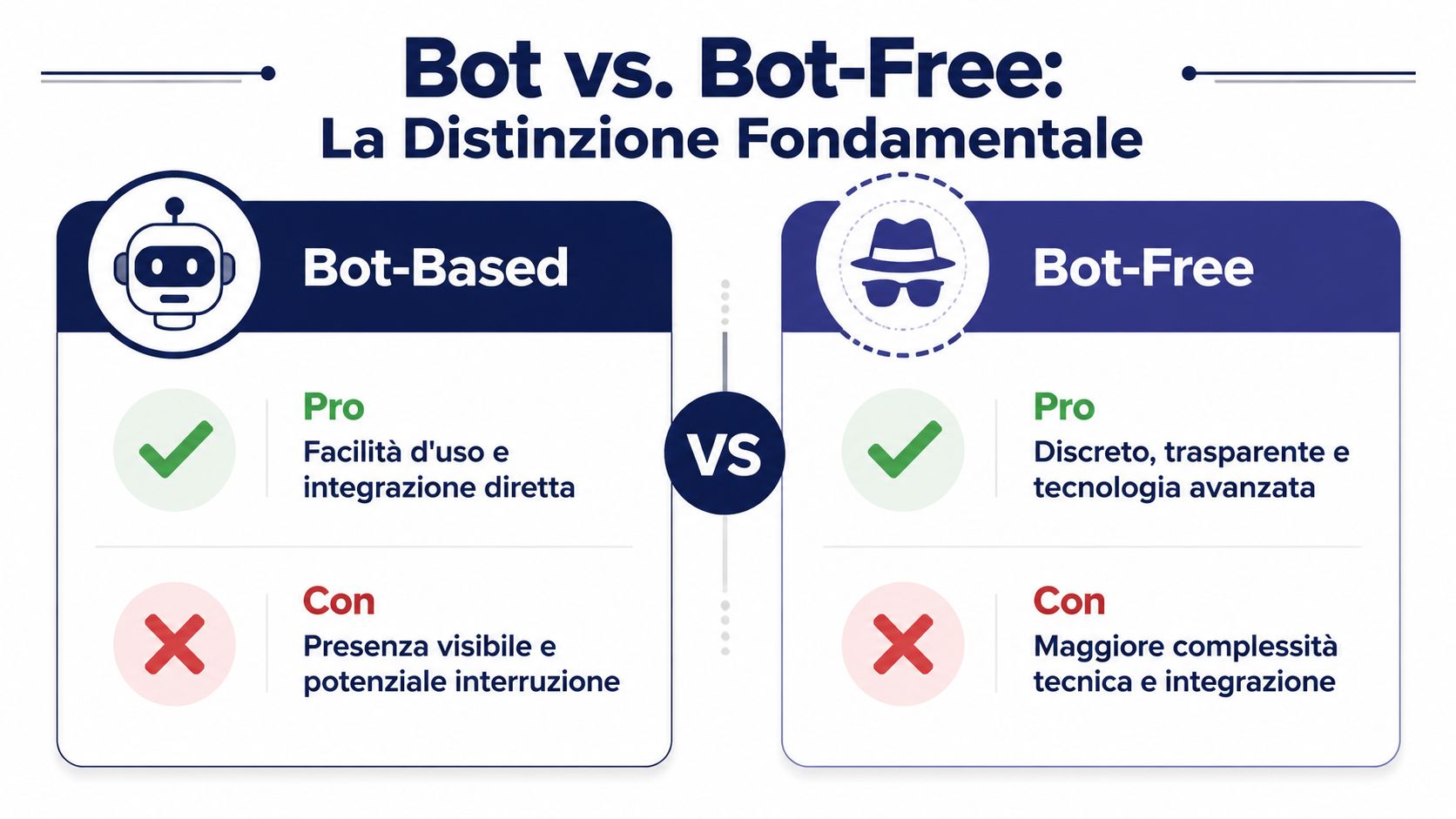
The most important distinction isn't between budget tools and premium tools. It's between bot-based tools and bot-free tools.
Bot-based tools, such as Otter, Fireflies, Fathom, or Read AI, join the call as visible participants. They record audio—and often video—and in many cases upload the meeting to the provider’s cloud. It’s a very convenient model. But it changes the dynamic.
For internal meetings, this architecture often works well. If the team is used to being recorded, the bot’s presence is almost unnoticeable. In addition, these tools usually offer more seamless integrations with calendars, CRMs, and centralized storage.
The practical benefits are clear:
In sales calls, interviews, and conversations with prospects or candidates, the presence of a bot changes the tone. It’s a detail that many reviews treat as secondary. It isn’t.
I use Granola every day for calls with clients and partners for this very reason. I first tried Otter, Fireflies, and Fathom. They work well technically. The problem, in my context, was the visible indicator that the call is being recorded. As soon as it appears, the conversation becomes more cautious. People express themselves less spontaneously and tend to leave out the very nuances that make the call valuable.
Rule of thumb: If the value of the meeting depends on the candor of the conversation, a bot-free meeting is almost always the right choice.
Bot-free tools, such as Granola and Meetily, capture audio directly from the device. They do not add any participants. They do not “intrude” on the virtual room. This is not just a technical detail. It is a choice about trust, privacy, and conversational dynamics.
There is a trade-off. In some cases, a bot-free approach requires more attention on the device, operating system, or local workflow. But if you’re in consulting, complex sales, or recruiting, it’s often a sensible trade-off.
There's no such thing as the absolute best tool. There's only the one that's right for the way you work, your level of comfort with the cloud, and the kinds of conversations you have each week.
| Tool | Architecture | Ideal For | Estimated Price (per month) |
|---|---|---|---|
| Granola | Bot-free | Consultants, founders, and salespeople who don't want to change the call | $18 |
| Otter.ai | Bot-based | Teams that want live transcription and a searchable archive | $8–10 |
| Fireflies.ai | Bot-based | Sales team using CRM and in need of integrations | $10 |
| Fathom | Bot-based | Anyone who wants to get started for free without any financial burden | Free plan with unlimited recording |
| Fellow | Primarily meeting workflow | Teams that want a calendar, notes, and follow-ups all in the same workflow | High-quality |
| Meetily | Bot-free, local | Those who put privacy above all else | High-quality |
| Zoom AI Companion | Native | Teams Already Set Up on Zoom | High-quality |
| Microsoft Copilot | Native | Organizations Already on Microsoft 365 and Teams | High-quality |
| Read AI | Bot-based | Teams that want to link meeting insights with CRM data | High-quality |
Granola is my favorite tool for external calls. The reason is simple: it stays out of the way. On a Mac, it runs in the background, detects when a call is active, and lets me keep taking rough notes—and after the meeting, the AI enriches them with the context from the transcript. This hybrid model is smarter than it seems. It doesn’t replace your judgment—it complements it.
Otter.ai is still a solid choice when you want live transcription and a searchable archive. If your challenge is quickly finding out “who said what” in a large collection of meetings, it’s still a sensible option. The fact that it integrates well with Google Calendar and Outlook is helpful for organized teams.
Fireflies.ai has a more business-workflow-oriented approach. Integrations with Salesforce and HubSpot are the main reason to choose it, more so than the transcription feature itself. The AskFred feature is useful if you want to search your call history as if it were a knowledge base.
For those just starting out, Fathom is the easiest way to get started. The free plan with unlimited recording significantly lowers the barrier to entry. You don't choose it because it's the most sophisticated. You choose it because you can immediately see if this category really makes a difference in your day.
Fellow is different from the rest. More than just a transcription tool, it’s a system for the entire meeting lifecycle: agenda first, notes during the meeting, and follow-up afterward. If your team’s issue isn’t just documentation but meeting discipline, this is worth checking out.
Meetily appeals to a more specific audience. It is open-source, licensed under the MIT License, and focuses on local transcription. If you want the data to remain on the device, it is one of the most radical and consistent options.
The built-in options— Zoom AI Companion and Microsoft Copilot—are quite good if you want to avoid adding another layer of tools. If you're already immersed in that ecosystem, it makes sense to start there before adding complexity.
For a broader perspective on the evolution of these interfaces, it’s also worth reading this guide to voice assistants for entrepreneurs.
The right criterion isn't "which tool has the most features." It's "which tool produces useful notes without making the way I talk to people any worse."
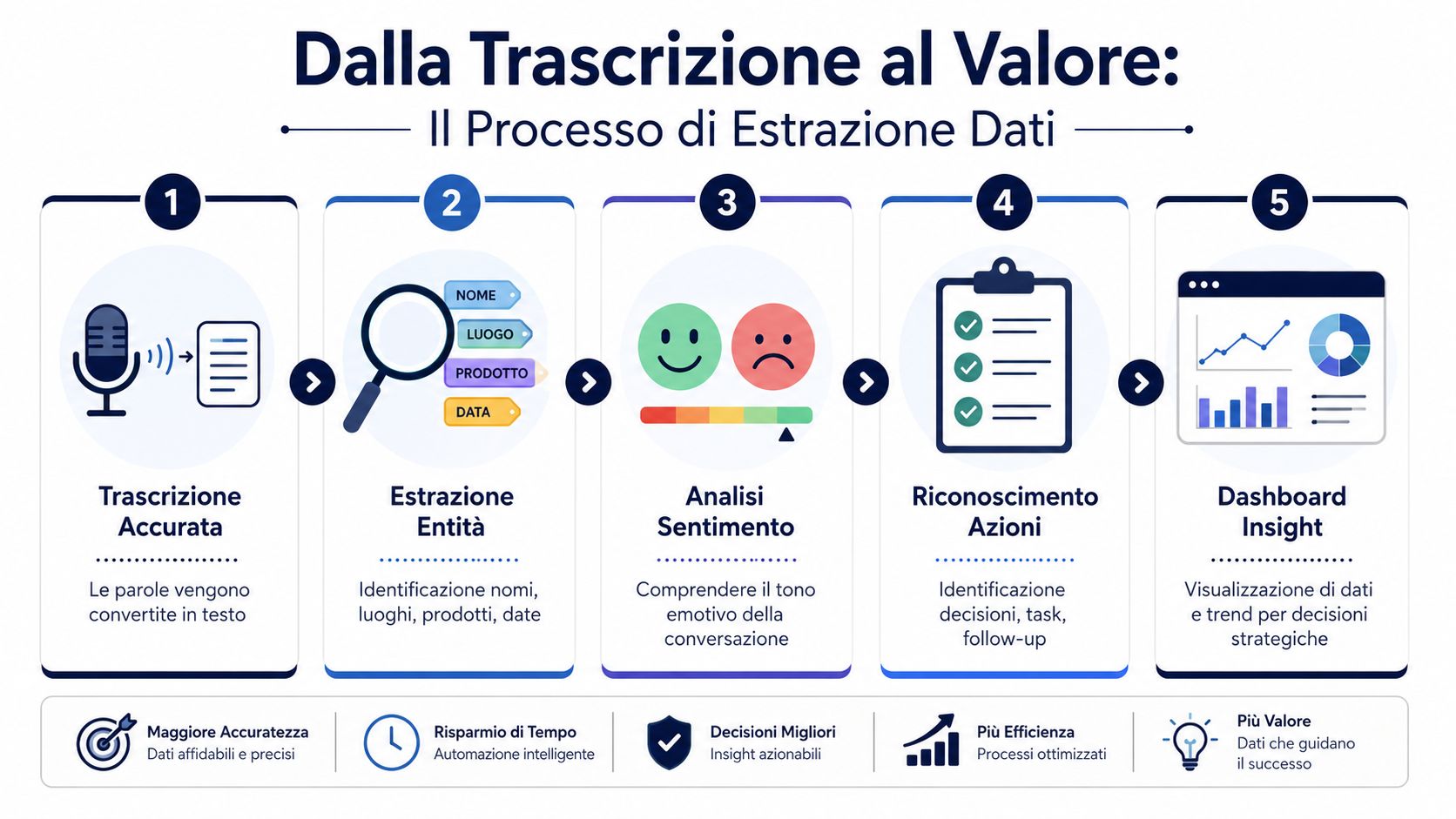
Transcription, on its own, has almost become a commodity. The real difference lies in what happens next.
The most useful feature I’ve seen in practice wasn’t a single, well-written summary. It was the ability to review many conversations together. During a series of sales calls, three different prospects had raised the same objection regarding data portability. During the individual meetings, these seemed like isolated comments. In the aggregated notes, the pattern was clear.
This is the key step. You're no longer just filing away transcripts. You're building a conversational dataset.
Oracle describes this process well: AI transcription isn’t limited to audio-to-text conversion, but also includes sentiment analysis, concise summaries, clear action items, and the conversion of discussions into searchable transcripts, as explained on Oracle’s page on meeting transcription automation. In practice, the raw text is just the first layer.
Here are the features that make a difference:
However, there is one condition that many companies underestimate. The first and most essential requirement for AI adoption in Italian SMEs is to have clean, organized, and well-structured data, because while AI enhances performance, if the conversational data is not of high quality, it becomes an amplifier of chaos, as highlighted in this presentation on AI adoption in SMEs.
If meetings are noisy, full of overlapping speech, and lack context, no AI will provide you with reliable insights. The quality of the conversation remains an operational variable, not just a technological one.
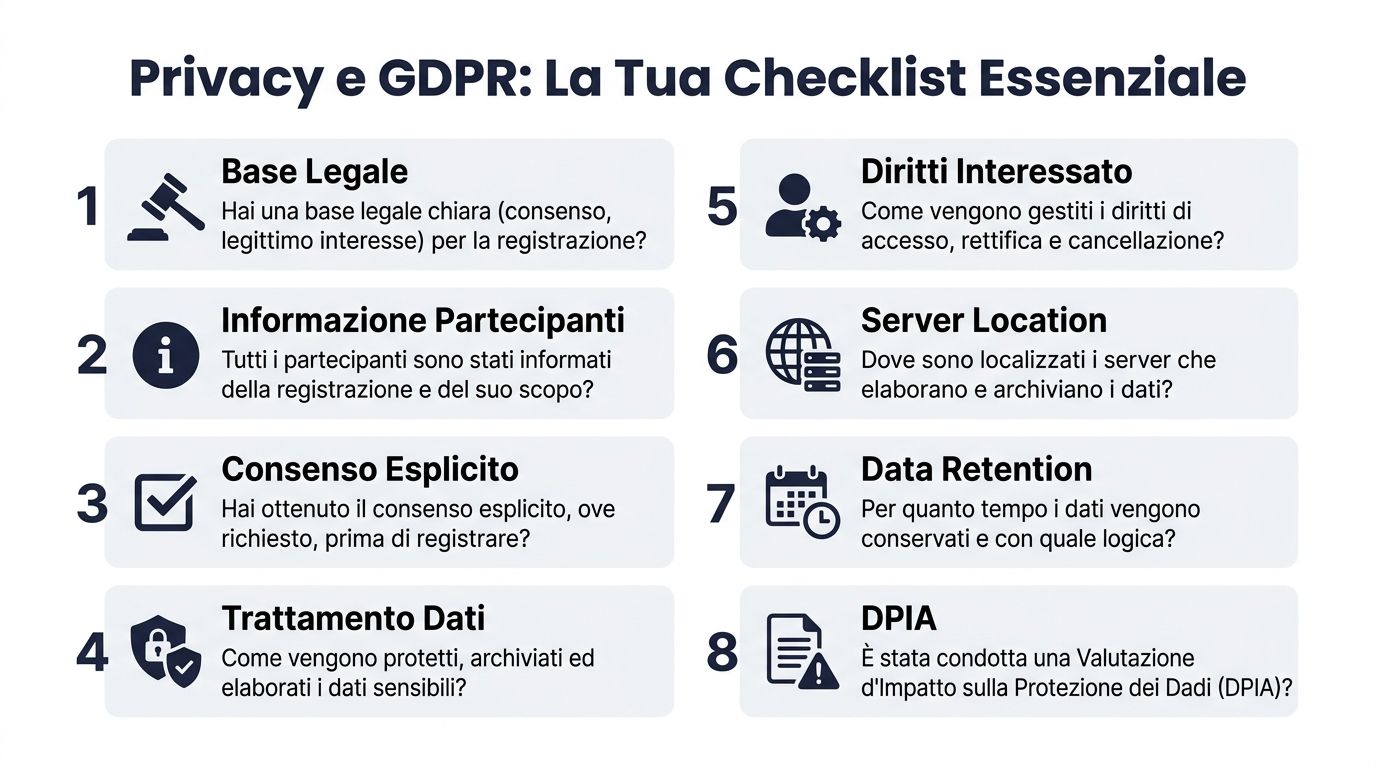
Most users evaluate these tools based on note quality, price, and integrations. This is an incomplete assessment, especially in Europe.
There is a significant gap between the ease of transcription offered by many free tools and the data governance requirements—such as GDPR and AML—necessary for SMEs, an issue rarely addressed by generalist providers, as highlighted in this analysis of meeting transcripts and governance limitations.
Before choosing a provider, I would ask myself these very specific questions:
If you don't know where the audio and transcripts end up, you're not using a productivity tool. You're creating a new source of risk.
This doesn't mean that every cloud transcription is wrong. It means you can't treat it as a harmless feature.
For a European approach to privacy, the most consistent options are those that limit the circulation of data. Meetily, with its local transcription, is the most radical approach. Granola, with its device-first model and no visible participants, is better suited to contexts where you want to limit exposure without altering the conversation.
Those working on these issues should also think in broader terms of operational data sovereignty. This in-depth analysis of “operational choices for European AI data” is useful precisely because it shifts the discussion from features to responsibility.
Important note: This step does not replace a legal or compliance assessment. If you operate in a regulated industry, you should consult with your privacy or legal counsel before standardizing the process.
If you want maximum control, you can build your own stack in-house. Today, this is no longer a project reserved solely for enterprise teams, but it’s still a decision that requires careful consideration.
The most logical combination is this:
Essentially, it's the same philosophy that makes Meetily so appealing: breaking down recording, transcription, and post-processing into manageable components.
The benefits are real:
I wouldn't recommend it to anyone who just wants “a tool that works.” I would recommend it to three specific groups: technical teams with a strong focus on privacy, small and medium-sized businesses that handle sensitive conversations, and professionals who want to integrate transcription into their existing workflows.
There are, however, practical limitations. Whisper works well in Italian, but it isn’t perfect when strong regional accents, rapid code-switching, or people talking over each other come into play. In my experience, the most effective best practice remains a simple one: a good microphone, as little background noise as possible, and discipline in not talking over one another.
Practical observation: No model effectively handles three people speaking at the same time. Improving the meeting itself often yields better results than choosing a specific model.
If you're working a lot on Zoom, this page on how ELECTE integrates with Zoom is useful not so much for copying a stack, but for understanding how a conversation can become part of a broader data flow.
The right decision doesn't start with a list of features. It starts with the context in which you work.
If you hold internal meetings where recording is acceptable and useful, bot-based tools make a lot of sense. If you work in sales, consulting, recruiting, or negotiations where the quality of the conversation depends on spontaneity, the architectural choice changes, and a bot-free approach often becomes the most sensible solution.
AI meeting transcripts aren't just about saving time. They help us make better decisions because they finally make conversations analyzable, comparable, and less reliant on individual memory.
If you want to turn transcripts, operational notes, and other information streams into actionable business insights, ELECTE—an AI-powered data analytics platform for SMEs—helps you connect different sources, organize your data, and generate useful analyses without the complexity of enterprise-level systems. If you want to understand how to truly incorporate this information into your decision-making process, check out how ELECTE works.

.svg)


.svg)
.svg)