You’ve just received the usual email that no business owner looks forward to: a reminder about a deadline, uncertainty about the scope of the requirement, and the feeling that the mandatory energy audit is just yet another formality to check off the list. In reality, for many Italian companies, the point isn’t just to avoid a fine, but to understand how to turn a technical requirement into a useful tool for monitoring energy costs, inefficiencies, and investment priorities.
The problem is that this topic is often presented as a static checklist. Instead, for business owners, what matters is knowing who is responsible for it, when it’s due, what it should include, and how to interpret the results without getting lost in regulatory jargon. The truly interesting part is that the assessment doesn’t end with the submission of the report—value is created when the data becomes part of an ongoing process of monitoring and improvement.
A manufacturing company receives a very specific internal inquiry, and it often comes at precisely the moment when precise answers are needed. The administrative director wants to know whether energy monitoring is still optional, while the plant manager already suspects that energy consumption is not fully under control. In such a situation, a vague answer can waste time, generate avoidable costs, and lead to a non-compliance issue.
The mandatory energy audit serves to refocus the discussion on the data. Under Legislative Decree 102/2014, energy consumption analysis becomes a periodic requirement for categories of businesses defined by specific thresholds, as outlined in the Assolombarda guidelines and the Bosetti & Gatti regulatory framework. For those who must actually implement it, the point is not merely to produce a document, but to use it to analyze consumption, priorities, and costs in a way that benefits the business.
Rule of thumb: If you're not yet sure whether you're subject to the reporting requirement, your first step should be to check the thresholds, reporting frequency, and consumption data—not the report format.
For many Italian companies, an energy audit is also an opportunity to control costs and understand where it makes the most sense to take action first. If energy consumption is monitored only after the fact, the picture becomes clear too late. If, on the other hand, the company combines compliance with continuous analysis of energy data—including through platforms based on artificial intelligence—the audit becomes part of a broader control process, useful for identifying recurring waste and investment priorities. This is where the true value lies: transforming a requirement into a tool for managing energy consumption.
The first step is to determine whether your company meets the eligibility criteria.
A mandatory energy audit is a technical snapshot of a company’s energy consumption, but viewed from an operational perspective. It does not merely record how much energy enters the facilities, processes, or locations; rather, it seeks to explain where energy use is concentrated, which departments consume the most, and what opportunities for improvement exist in day-to-day operations. For a company, it functions as a periodic review that brings order to energy bills, machinery, and usage patterns.
The relevant legislation is Legislative Decree 102/2014, which established that this diagnosis is a periodic requirement for categories of businesses defined by law, as explained in the CNI’s regulatory framework. The point here is not simply to compile a summary of consumption, but to conduct a technical and economic analysis that allows for the comparison of different scenarios and the selection of those most beneficial to the company.
In everyday language, an energy audit is often confused with a general audit or a facility inspection. The difference is substantial, because an energy audit is used to understand where energy is being consumed, why it is being consumed, and what alternatives can reduce the overall cost of energy over time.
A valid diagnosis is not limited to listing energy consumption figures. It must comply withAnnex 2 of the decree and the UNI CEI EN 16247-1/2/3/4 standards, with a structure that makes the data easy to read and the options comparable; furthermore, for the purposes of this requirement, its preparation is reserved for qualified entities such as EGE, ESCOs, or certified energy auditors.
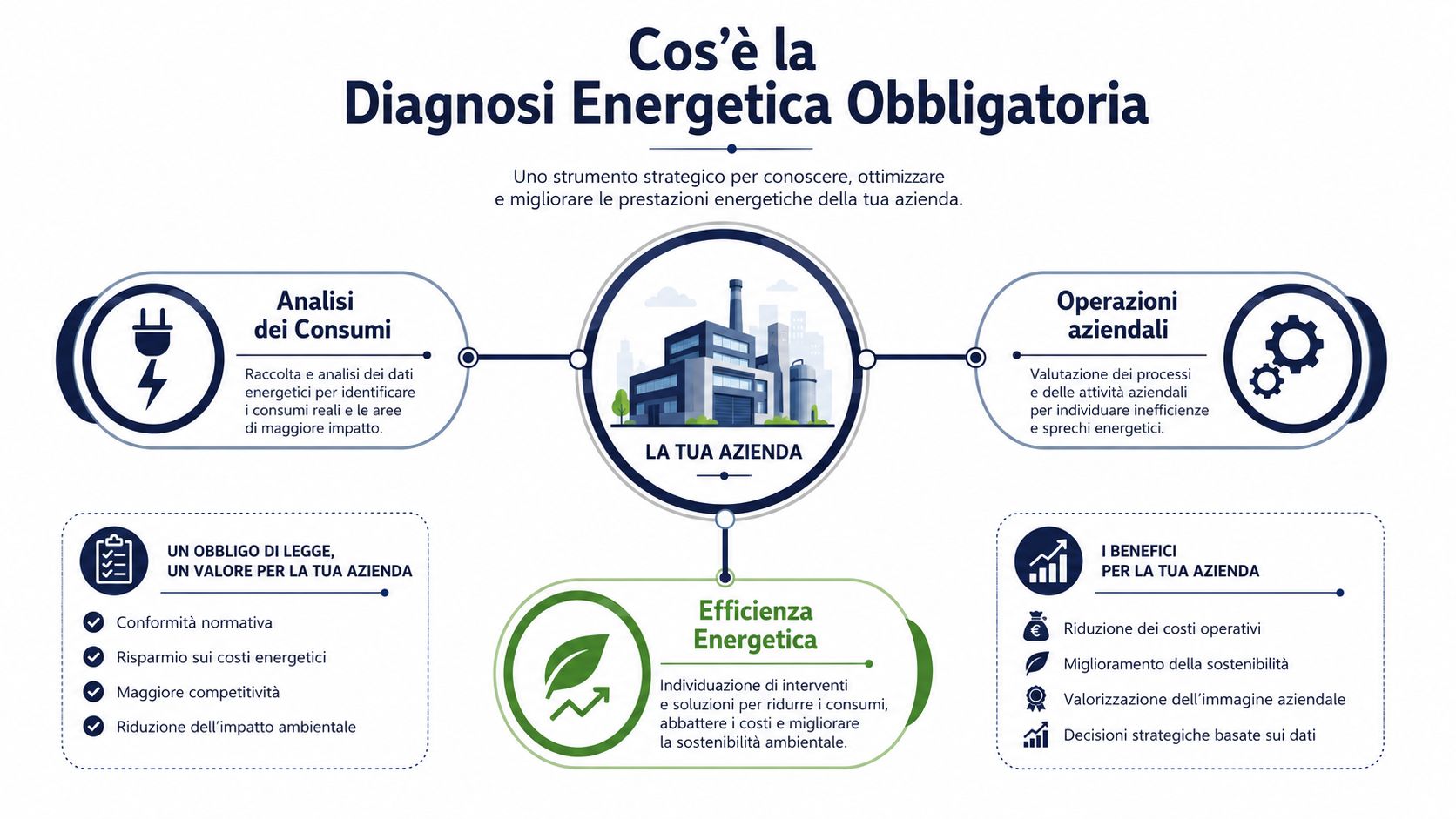
An energy audit isn't just about telling you how much you spend; it's about explaining where that expense comes from and what choices can reduce it.
For this reason, the mandatory energy audit should be viewed as a working tool, not simply as a document to be filed away. If a company links regulatory compliance to continuous monitoring of energy data—including through platforms based on artificial intelligence—the audit becomes a starting point for identifying recurring waste, comparing the areas with the highest energy consumption, and deciding where to take action first.
The first question for business owners is a very practical one: Do we fall under the regulation or not? The answer does not depend on a single criterion, because the requirement arises from different categories related to the size of the business, energy consumption, and, in some cases, the proportion of energy costs relative to revenue. In practice, the regulation doesn’t require the same thing from everyone, but it does require those who exceed certain thresholds to demonstrate that their consumption data has been recorded and analyzed using a method recognized by ENEA.
Large companies are those with more than 250 employees and, in addition, an annual revenue exceeding 50 million euros or an annual balance sheet total exceeding 43 million euros ( Assolombarda). For these companies, the energy audit is not a one-time check but a process to be repeated according to the cycle specified by the regulation, because the energy profile can change based on production, shifts, facilities, and organizational structure.
Energy-intensive businesses, on the other hand, are identified by parameters related to energy consumption and the ratio of energy costs to revenue. The technical sources cited indicate annual consumption thresholds of at least 2.4 GWh and an energy cost ratio that, according to the reference guides, ranges between 2% and 3% ( EdilTecnico). Here, the focus is not only on the company’s size but also on the amount of energy the company consumes and its economic impact, because two companies with similar workforces may have different obligations if their energy consumption patterns differ significantly.
For the most recent cycle, a technical source indicates that the requirement has been extended to companies with total energy consumption exceeding 10 TJ/year, with the first deadline set forOctober 11, 2026 ( Ollum). This is the point that often raises questions, because it shifts the focus from the company’s scope alone to the overall energy consumption figure. If energy consumption is spread across multiple facilities, warehouses, or production lines, the assessment must be based on the total, not just on any single site.
CriterionLarge enterprisesEnergy-intensive enterprisesCompany sizeMore than 250 employeesNotthe primary criterionRevenueOver 50 million eurosThresholdsrelated to energy costsBalance sheetOver 43 million eurosThresholdsrelated to annual consumptionEnergy consumptionRelevant for audit purposesAt least 2.4 GWh per yearEnergy cost shareNot determinative on its ownGuidelines between 2% and 3% of revenueNew threshold for 2026May be a factor if it exceeds the energy limitSignificant obligation above 10 TJ/year
Public administrations listed in the ISTAT directories are not subject to this requirement. Furthermore, based on the operational guidelines referenced in the technical sources, companies with energy consumption below 50 TOE are also excluded. For business owners, verifying compliance is only seemingly simple: it is necessary to check the number of employees, revenue, financial statements, and annual energy consumption together, because a change in just one of these factors is enough to alter the company’s status with regard to the requirement.
First step: Review your number of employees, revenue, financial statements, and annual consumption. If even one of these factors changes, your status may change.
The practical question isn’t whether the obligation exists, but which date you should use to avoid missing the deadline. For an SME or a more structured company, the audit should be viewed as a monitoring schedule, not as a one-time formality to check off. The starting point remains the four-year cycle stipulated by the regulations, with the first deadline set for December 5, 2015, and the consumption figures fromthe previous calendar year serving as the basis for evaluation.
Every company within the scope must follow a recurring process. After an initial assessment, the reference is not limited to the submitted document, because the subsequent review takes place within the 4-year cycle and requires up-to-date data, organized consumption records, and a consistent comparison with the previous period. For those managing multiple locations or production lines, the schedule must be viewed from a company-wide perspective; otherwise, the review risks being incomplete.
For entities falling under the new energy scope, the technical source cited in the operational guidelines specifies a deadlineof October 11, 2026. For companies already subject to the requirements, the next assessment is scheduled for 2027. This discrepancy often causes confusion, because the point at which a company becomes subject to the requirements does not always coincide with the point at which it enters the cycle that has already begun. Those who are building a continuous monitoring system—including one that uses digital tools and automated consumption analysis—can more easily determine in advance whether the data is leading toward a new compliance requirement, as demonstrated in a CSRD guide by ELECTE, where data collection and interpretation are just as important as the final report itself.
From an operational standpoint, there are cases in which the requirement does not apply or is relaxed. The technical guidelines cited by ENEA indicate that, as of the December 2020 deadline, large companies with total energy consumption of less than 50 TOE are exempt from the requirement. In other situations, ISO 50001 or EMAS certifications can have significant implications, especially when accompanied by a management system that ensures data traceability and consistent internal audits.
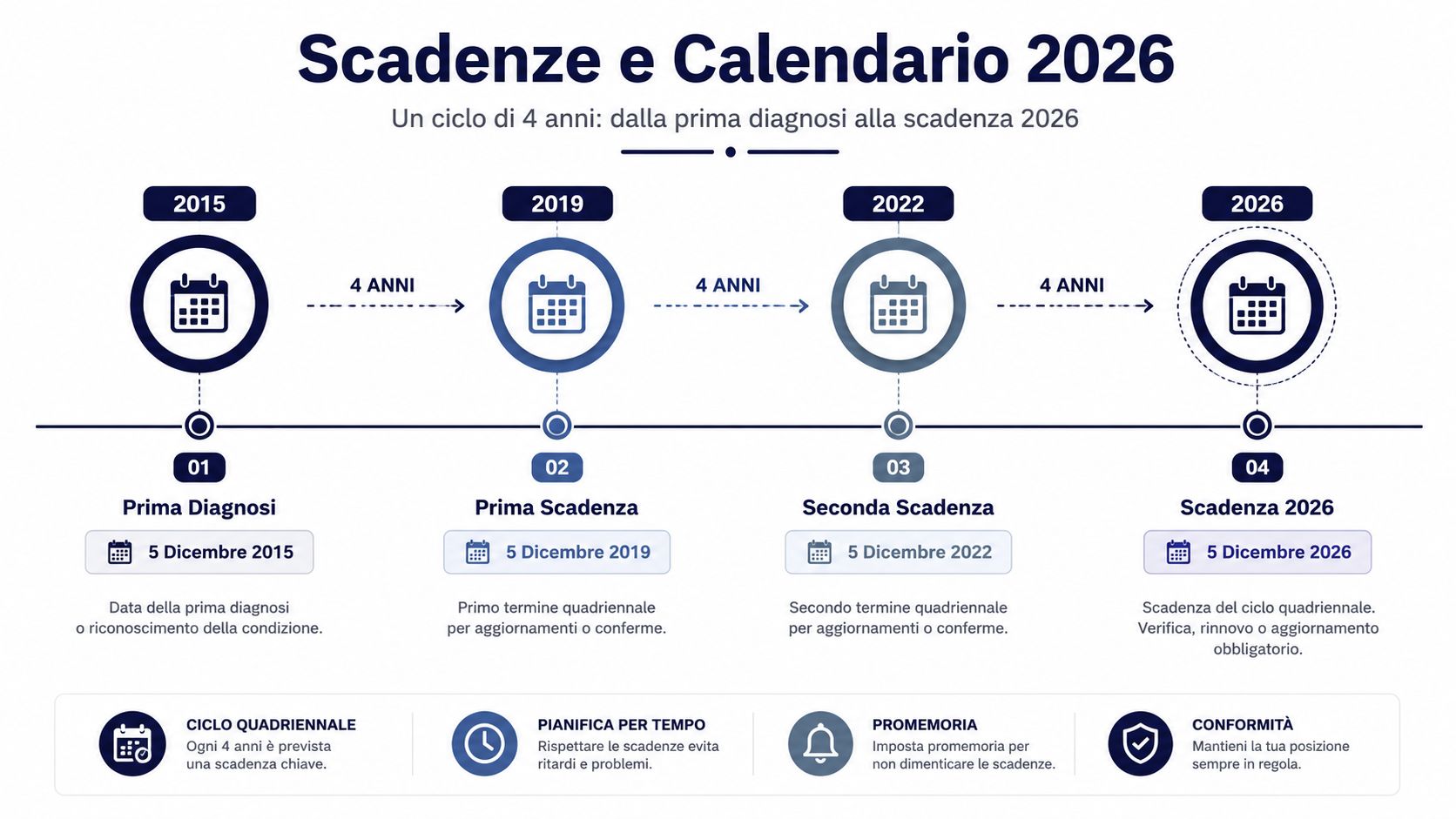
The calendar should not be treated as a standalone reminder. It should be managed as a data stream, with periodic checks on consumption, the departments involved, and the documents that verify the sources of those figures. This is where many companies take the wrong approach, because they view meeting deadlines as a one-time event, whereas in practice, continuity is essential.
If your business is already subject to the requirement, it’s a good idea to set up an internal control system that brings together the energy coordinator, the person in charge of accounting, and the person responsible for the facilities. If, on the other hand, you’re subject to the requirement for the first time, you need to clarify right away which year to use as the base, which consumption data to collect, and how often to update the data. Without this organization, the deadline will arrive before you’ve finished compiling the consumption data.
Practical tip: Work with the energy coordinator, the external consultant, and the administrative manager to create an internal schedule. If the data isn't under control, the deadline will come before the audit.
A useful energy audit does more than simply point out that energy costs are too high. It must outline, using a coherent technical framework, which alternatives were considered, the criteria used to compare them, and why one solution is more cost-effective than another over the life cycle of the project. It is a document designed to aid decision-making, not merely to provide a snapshot of energy consumption.
The regulatory framework refers toAnnex 2 of Legislative Decree 102/2014 and the criteria set forth in the UNI CEI EN 16247-1/2/3/4 standards. In practice, the report must describe energy consumption, processes, facilities, and possible actions using a comparative approach, so as to correlate the collected data with the operational decisions that the company can actually implement.
The key issue remains the evaluation of plant design alternatives. The audit must compare investment, operating, and maintenance costs, because the goal is to identify the solution with the lowest overall cost over time—not the one that seems most cost-effective only at the time of purchase ( Biblus ACCA).
For buildings, this requirement applies, among other cases, when renovating or installing new heating systems with a generator rated at ≥ 100 kW. In this situation, the assessment is used to compare system solutions and evaluate them based on total investment, operating, and maintenance costs—not just on their stated efficiency.
A simple example helps clarify the meaning of this requirement. A system that appears more efficient on paper may actually be less suitable if it requires excessively high upfront costs or more extensive maintenance over time. The assessment is intended precisely to avoid this misjudgment.
A thorough assessment doesn't just tell you how much you're spending on energy today—it helps you choose which measures will truly pay off in the future.
For a company that collects data in an organized manner, this step is much easier to manage. A continuous, clean, and consistent data foundation reduces data collection time, makes comparisons between scenarios more reliable, and helps explain why one solution is preferable to another.
Here, data monitoring becomes part of compliance. If a company regularly monitors consumption, facilities, and process variations, the analysis is not produced as a standalone document, but rather as the result of an already established information flow. For those who also link sustainability reporting with energy data, the CSRD Guide with ELECTE offers a useful reference for establishing a more organized and verifiable data collection framework: CSRD Guide with ELECTE.
A mandatory energy audit can only be managed effectively if the company treats it as a structured process, not as a task to be rushed through. The most challenging aspect for an SME is that the relevant data is often scattered across administration, maintenance, purchasing, and production; therefore, the first step is to get a clear picture of the situation before assigning the task to a technician.
The first step is to determine whether the company is actually subject to this requirement, using the criteria discussed earlier. Once this has been verified, a qualified entity must be selected, because an assessment that is valid for regulatory purposes must be prepared by an EGE, an ESCO, or a certified energy auditor.
Next, you need to organize the information. You’ll need consumption data for the reference period, plant data, site layouts, measurements already on hand, and any previous energy reports. If these elements are incomplete or arrive late, the audit takes longer and becomes less accurate—much like trying to make out a mosaic with half the tiles missing.
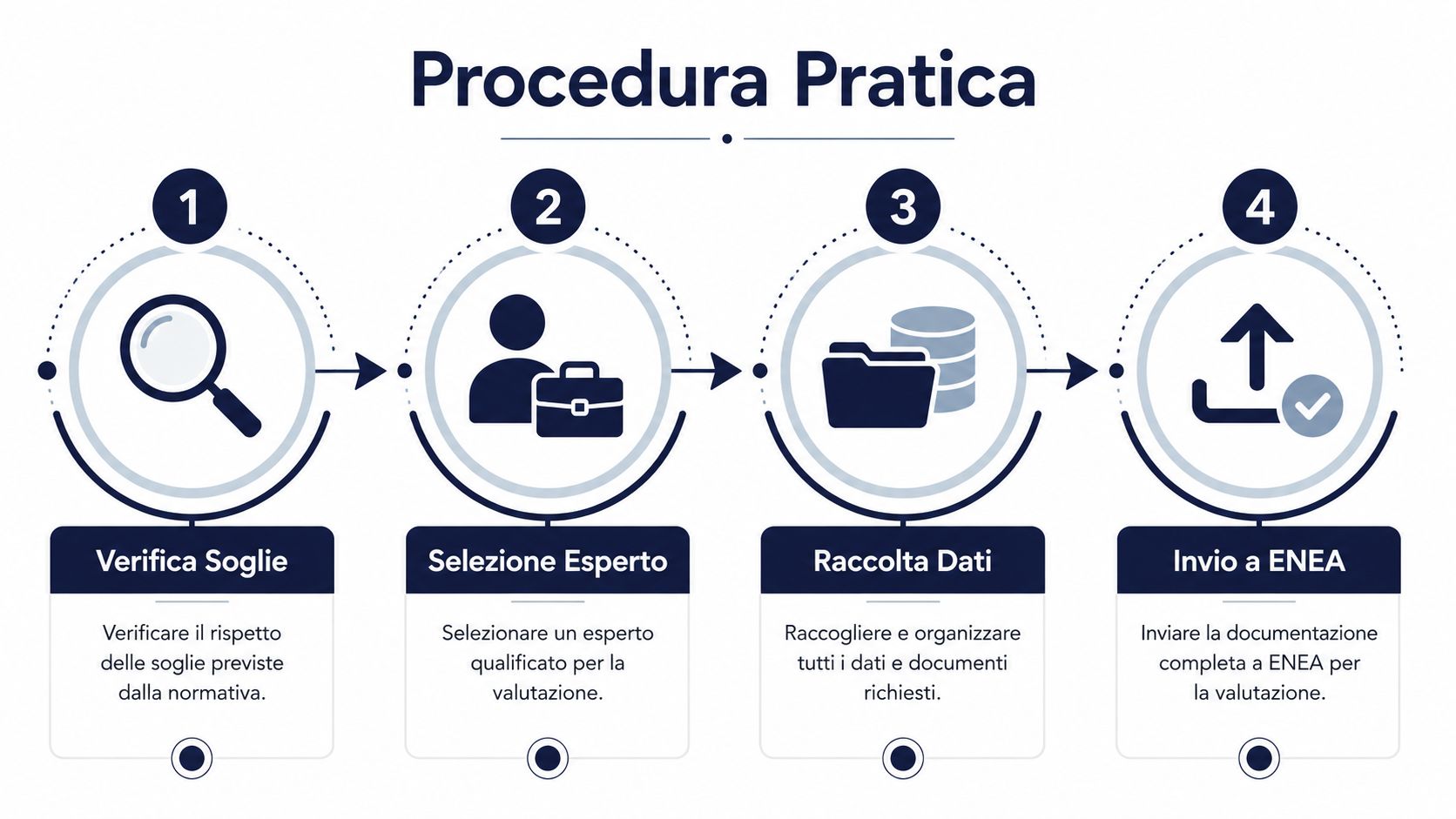
The diagnosis does not end with the submission of the report. If it is treated as an isolated incident, the company loses its most valuable benefit: the continuity between one audit and the next. The four-year cycle, on the other hand, requires constant monitoring, because only data collected over time allows for a comparison of interventions and an understanding of whether consumption patterns are truly changing.
That is why energy data management is not just a technical detail, but a key aspect of compliance. Those who regularly monitor consumption, systems, and process variations build a more solid information base, which is useful for both diagnostics and operational decisions. For companies looking to reduce manual work related to consumption tracking and reporting, digital analytics tools can help identify anomalies, trends, and meter reading inconsistencies—as seen in ELECTE’s AI solutions for the energy sector.
For many companies, the issue is not just whether the mandatory energy audit must be conducted, but rather to immediately assess two practical aspects: how much it costs to comply and how much it might cost not to. As far as penalties are concerned, the rules are clear: failure to conduct the audit results in administrative fines ranging from 4,000 to 40,000 euros.
The cost of the audit is not the same for everyone. It depends on the size of the company, the complexity of the facilities, and the scope of the analysis required. For an SME, the cost can vary significantly from one site to another, because the technical scope is never identical and there is no standard price that applies in every situation.
Here, it’s worth shifting our perspective. Comparing the diagnosis solely to the immediate economic cost leads us astray. The correct comparison is with the avoided cost—that is, with waste, inefficiencies, and poor decisions that remain invisible until someone actually examines the energy system.
Technical sources indicate that the diagnosis helps identify efficiency improvements and provide a more accurate picture of the energy profile, which has beneficial effects on cost control and investment planning. In practice, the document is not only used to demonstrate that the company is in compliance. It also helps identify where consumption patterns change, where anomalies occur, and where it is most worthwhile to take action first.
However, the diagnosis only really works if it doesn’t remain merely on paper. If it’s treated as a one-time formality, the data is lost after it’s submitted, and the company reverts to making decisions based on gut feelings. If, on the other hand, monitoring continues over time, the analysis becomes a foundation for comparing different periods, verifying the impact of actions taken, and tracking consumption on an ongoing basis. In this sense, energy data management is part of compliance, but it also provides concrete support for operational decisions.
For companies looking to reduce manual work related to consumption data and reports, digital analytics tools can help identify anomalies, trends, and inconsistencies in readings. For those also seeking tools to support efficiency improvement projects, it may be helpful to consult ELECTE’s guide to European funds.
The mandatory energy audit is not just a deadline to meet. It is an assessment that helps you determine whether your company is subject to the requirement, manage the four-year cycle, produce a compliant report, and—most importantly—turn energy consumption data into useful insights for making better decisions.
Essential Checklist:
Today, the real difference is made by those who treat energy as an information asset rather than a passive expense. If you want to build a clearer database, monitor consumption on an ongoing basis, and better prepare for upcoming compliance cycles, visit ELECTE and discover how an analytics platform can help you transform energy management into faster and more sound decisions.

.svg)


.svg)
.svg)