The Hidden AI: When Artificial Intelligence Works in the Shadows.
How many times a day do we interact with AI without knowing it? Gmail blocks 99.9% of spam, Amazon generates 35% of sales through AI recommendations, 71% of banks use anti-fraud AI. The counterintuitive finding: there is a "reverse placebo effect" - algorithms work better when users don't know it's AI. The ethical paradox: transparency can degrade effectiveness. The future requires calibrated "windows of transparency," not elimination of invisible AI.

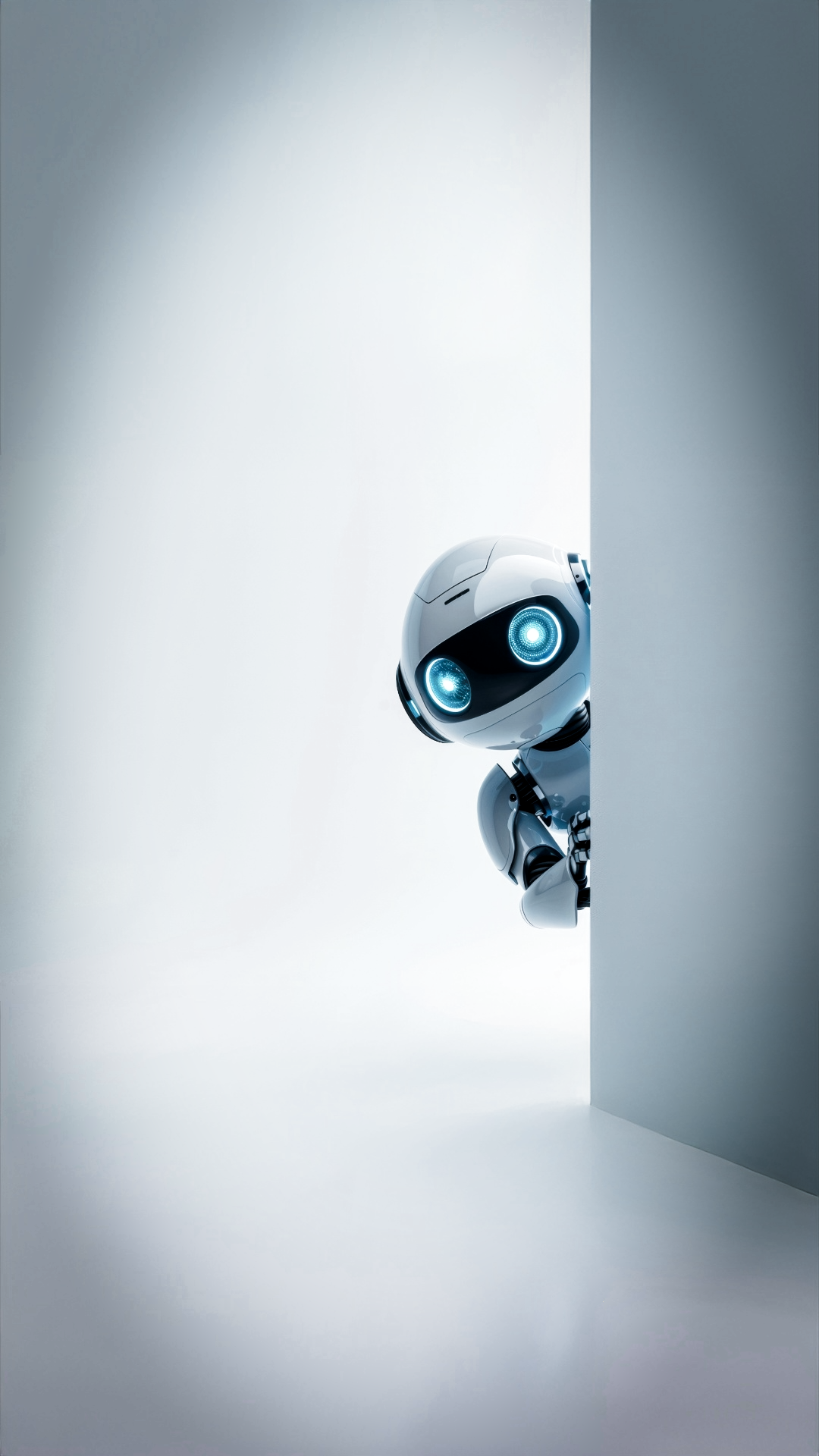
Every day we interact with artificial intelligence hundreds of times without even realizing it.
Behind every recommendation on Netflix, every Google search result, every post that appears in our social feed lies a sophisticated algorithm that studies our behaviors and anticipates our desires. This "invisible intelligence" has radically transformed our relationship with technology, creating a digital ecosystem that continually adapts to our preferences, often in ways so subtle as to be completely invisible to our conscious perception.
Invisibility As an Adoption Strategy.
This perspective is particularly fascinating because it reveals how many of us interact daily with sophisticated AI systems without knowing it, creating a form of unconscious acceptance that overcomes traditional resistance to new technologies.
Concrete Examples of Hidden AI
Anti-Spam Filters: The AI that Protects Without Being Noticed
Gmail has used a form of advanced machine learning for years to classify emails, but most users perceive this system simply as a "spam filter". The reality is far more sophisticated: Google blocks over 99.9% of spam, phishing and malware using machine learning algorithms fed by user feedback
Between 50-70% of the emails Gmail receives consist of unsolicited messages, yet most users are unaware of the complexity of the AI system operating behind the scenes. In 2024, Google introduced RETVec, an even more advanced algorithm that has reduced false positives by 19.4%.
E-commerce Recommendations: The Algorithm that Seems to Know Us
When you shop on Amazon, you may have noticed the "people who bought this also bought..." section. What might seem like a simple automated suggestion is actually the result of sophisticated artificial intelligence that analyzes huge amounts of data, including browsing cookies and user preferences, to suggest related products. This recommendation system has literally revolutionized online commerce. According to McKinsey, up to 35 percent of Amazon's sales are generated precisely because of this proprietary complementary recommendation system.
Amazon has adopted item-to-item collaborative filtering, an advanced technology capable of handling enormous volumes of data and generating personalized recommendations instantly. The effectiveness of this approach is directly reflected in the financial results: in the first quarter of 2025, the e-commerce giant recorded net sales of $155.7 billion, marking a 9% increase compared to $143.3 billion in the same period of 2024
A considerable portion of this growth can be attributed to the smart recommendation system, which is now strategically integrated into every touchpoint of the customer journey, from product discovery to final checkout.
Automatic Correction: Invisible Language Patterns
Remember the T9 on old mobile phones, when we had to press the same key multiple times to type a letter? Today our smartphones not only automatically correct typing errors, but even anticipate our intentions using extremely sophisticated artificial intelligence models. What we perceive as a "normal feature" is actually the result of complex Natural Language Processing (NLP) algorithms that analyze linguistic patterns and context awareness in real time.
Autocorrect, intelligent sentence completion, and predictive text have become so intuitive that we take them for granted. These systems do more than just correct spelling errors-they continuously learn from our writing style, memorize our most frequent expressions, and adapt to our linguistic peculiarities. The result is an invisible assistant that constantly improves our writing experience, without our realizing the extraordinary complexity of the artificial intelligence operating behind each and every touch of the screen.
Fraud Detection: Silent Security
Every time we use our credit card abroad or make an unusually large online purchase, an artificial intelligence algorithm instantly analyzes hundreds of variables to decide whether to authorize or block the transaction. What we perceive as simple "bank security" is actually an AI ecosystem that works 24 hours a day, comparing our spending patterns with millions of behavioral profiles to detect anomalies in real time.
The numbers speak for themselves: 71 percent of financial institutions now use AI and machine learning for fraud detection, up from 66 percent in 2023. At the same time, 77 percent of consumers actively expect their banks to use AI to protect them, showing growing acceptance when AI quietly works for their security.
These systems do more than just monitor individual transactions: they analyze geolocation, times of use, access devices, types of merchants, and even how fast we type in our PINs. Artificial intelligence can detect sophisticated fraud attempts that would completely escape the human eye, creating an invisible safety net that accompanies us in every financial movement without ever showing itself openly.
The Deep Implications of Invisible AI.
Unconscious Acceptance: The Paradox of Resistance
When AI is invisible, it doesn't generate resistance. Consumers are becoming increasingly aware of the potential dangers of digital life, with growing concerns about data security risks: 81% of consumers think that the information collected by AI companies will be used in ways that will make them uncomfortable, according to a recent study.
At the same time, however, the same people who might be skeptical of "artificial intelligence" are quietly using AI systems if labeled differently or invisibly integrated into the services they already use.
The Reverse Placebo Effect: Is it Better Not to Know?
The same algorithms work better when users don't know it's AI. This discovery represents one of the most counterintuitive phenomena in human-machine interaction. Scientific research has demonstrated the existence of a genuine "AI placebo effect" that works in reverse compared to the medical one: while in medicine placebos improve conditions through positive expectations, in AI transparency can worsen system performance.
A 2024 study published in the Proceedings of the CHI Conference revealed that even when participants were told to expect poor performance from a fictitious AI system, they continued to perform better and respond faster, demonstrating a robust placebo effect resistant even to negative descriptions.
This "transparency dilemma" reveals that the negative effect is maintained regardless of whether disclosure is voluntary or mandatory.
User expectations regarding AI technology significantly influence study results, often more than the system's actual functionality. Research has identified that performance expectations with AI are inherently biased and "resistant" to negative verbal descriptions. When an application fails to predict what we want, it seems "stupid" to us because we have internalized high expectations of personalization and prediction.
Groundbreaking research from MIT Media Lab has shown that the expectations and beliefs we have about an AI chatbot drastically influence the quality of our interactions with it, creating a genuine "technological placebo effect". The study revealed that users can be "primed" to believe certain characteristics about the motives and capabilities of artificial intelligence, and these initial perceptions translate into significantly different levels of perceived trust, empathy and effectiveness.
In other words, if we believe a chatbot is "empathetic" or "intelligent," we actually tend to perceive it as such during conversations, regardless of its actual technical capabilities. This phenomenon suggests that our relationship with AI is as much psychological as it is technological, opening up fascinating scenarios about how our expectations can shape the digital experience long before the algorithm even goes into action.
The Future of Invisible AI
Transparency As An Ethical Necessity?
A silent revolution is emerging from consumer awareness: 49 percent of adults globally now explicitly demand transparency labels when artificial intelligence is used to create content, signaling an irreversible paradigm shift in audience expectations. This is no longer a niche demand from tech experts, but a mainstream demand that is redefining industry standards.
Forward-thinking companies are already capitalizing on this trend: those that implement transparent policies on privacy, data security, and accessible user controls are not only building more trust, but strategically positioning themselves to dominate the marketplace of the future. Transparency is quickly becoming a decisive competitive advantage, no longer an additional cost to be borne.
Toward a Sustainable Balance
The challenge of the future will not be to eliminate invisible artificial intelligence-an impossible and counterproductive task-but to architect a digital ecosystem where technological effectiveness, operational transparency and user control coexist harmoniously.
Imagine a concrete scenario: when Netflix suggests a series to you, you might click on a discrete icon to discover that the recommendation is based 40 percent on your viewing times, 30 percent on favorite genres, and 30 percent on users similar to you. Or, when Amazon suggests a complementary product, a simple explanatory note might reveal that 8 out of 10 people who bought the item in your cart actually bought the suggested one as well.
The crucial balance emerges between transparency and protection of intellectual property: companies should reveal enough about their systems to build trust and respect users' rights, but not so much as to expose the algorithmic secrets that represent their competitive advantage. Netflix can explain the macro-factors of its recommendations without revealing the specific weights of its algorithm; Google can clarify that it ranks results by relevance and authority without disclosing the entire formula.
We are witnessing the emergence of a new paradigm: AI systems that retain their predictive power and fluidity of use, but offer users calibrated "windows of transparency." Spotify might allow you to see the major categories that affect your Discover Weekly, while banking apps might explain in plain language the types of anomalies that triggered a transaction to be blocked. The principle is simple: AI continues to work behind the scenes, but when you want to understand the "why," you get a useful explanation without compromising the company's intellectual property.
Conclusion: The AI that Hides to Serve Better, or to Manipulate?
AI's reverse placebo effect forces us to completely rethink the relationship between transparency and technological effectiveness. If systems work better when users don't know they're interacting with AI, we are facing a fundamental ethical paradox: transparency, generally considered a positive value, can actually degrade the user experience and system effectiveness.
Perhaps the real change is not AI disappearing from business meetings, but AI hiding behind familiar interfaces, silently shaping our everyday experiences. This "invisible intelligence" represents both an opportunity and a responsibility: the opportunity to create truly useful and integrated technologies, and the responsibility to ensure that this integration occurs ethically, even when disclosure might compromise effectiveness.
The central question becomes: are we witnessing the natural evolution of a mature technology that integrates seamlessly into everyday life, or a sophisticated form of consent manipulation? Hidden AI is not inherently good or bad: it is simply a reality of our technological era that requires a mature and conscious approach from developers, regulators and users.
The future probably belongs to AI systems that know when to show up and when to stay in the shadows, always serving the human experience, but with accountability mechanisms that do not depend on the user's immediate awareness.
The challenge will be to find new forms of transparency and accountability that do not compromise effectiveness but maintain democratic control over the systems that govern our lives.
FAQ - Frequently Asked Questions about Hidden AI.
What is hidden AI?
Hidden AI is artificial intelligence built into everyday services without users being aware of it. It includes systems such as Gmail's spam filters, Amazon's recommendations, automatic smartphone correction, and bank fraud detection.
Where do we encounter hidden AI every day?
- Gmail: Blocks 99.9% of spam using advanced machine learning
- Amazon: 35% of sales come from AI recommendations
- Smartphones: Autocorrect and predictive text based on NLP
- Banks: 71% of financial institutions use AI to detect fraud
- Social media: Content moderation and personalization algorithms
Why does hidden AI work better than declared AI?
Scientific research demonstrates an "inverse placebo effect": users perform better when they do not know they are interacting with AI. Even with negative descriptions of the system, users perform better if they believe they have AI support. Disclosure of AI use systematically reduces user trust.
What are the benefits of invisible AI?
- Unconscious acceptance: Eliminates psychological resistance to AI
- Seamless experience: Doesn't interrupt the user's natural flow
- Better performance: Algorithms work more effectively without user bias
- Mass adoption: Facilitates the integration of advanced technologies
What are the risks of hidden AI?
- Lack of control: Users cannot question decisions they are not aware of
- Algorithmic bias: AI replicates and amplifies existing prejudices with scientific credibility
- Diffused responsibility: Difficult to determine who is responsible for wrong decisions
- Unconscious manipulation: Risk of influencing behavior without informed consent
How can I know if I am using hidden AI?
Most modern digital services use AI in some form. Signs include:
- Personalized recommendations
- Intelligent automatic corrections
- Effective spam/fraud detection
- Personalized search results
- Automatic content moderation
Is covert AI legal?
Currently, most hidden AI operates in legal gray areas. 84% of experts support mandatory disclosure of AI use, but regulations are still evolving. The EU is developing frameworks for AI transparency, while the US focuses on user rights.
How to protect yourself from the risks of hidden AI?
- Digital education: Understanding how the services we use work
- Reading policies: Checking how companies use our data
- Diversification: Not relying on a single service for important decisions
- Critical awareness: Questioning automatic recommendations and results
- Regulatory support: Supporting legislation for AI transparency
What is the future of covert AI?
The future will require a balance between effectiveness and transparency. We will probably see:
- New forms of accountability that don't compromise effectiveness
- AI systems that know when to reveal themselves and when to remain hidden
- Ethical frameworks for the responsible use of invisible AI
- Greater digital literacy for aware users
Is hidden AI always harmful?
No. Hidden AI can significantly improve user experience and service effectiveness. The problem arises when there is a lack of informed choice and democratic control. The goal is to strike a balance between practical benefits and user rights.
This article is based on in-depth research conducted in 2024-2025 on academic publications, industry reports and sector studies to provide a comprehensive overview of invisible AI and its implications for contemporary society.
Comments
No comments yet — start the conversation.