Google DeepMind AI Cooling System: How Artificial Intelligence Revolutionizes Data Center Energy Efficiency
Google DeepMind achieves -40% data center cooling energy (but only -4% total consumption, since cooling is 10% of total)-accuracy 99.6% with 0.4% error on PUE 1.1 via 5-layer deep learning, 50 nodes, 19 input variables on 184,435 training samples (2 years data). Confirmed in 3 facilities: Singapore (first deployment 2016), Eemshaven, Council Bluffs ($5B investment). PUE Google fleet-wide 1.09 vs industry average 1.56-1.58. Model Predictive Control predicts temperature/pressure next hour by simultaneously managing IT loads, weather, equipment status. Guaranteed security: two-level verification, operators can always disable AI. Critical limitations: zero independent verification from audit firms/national labs, each data center requires custom model (8 years never commercialized). Implementation 6-18 months requires multidisciplinary team (data science, HVAC, facility management). Applicable beyond data centers: industrial facilities, hospitals, shopping centers, corporate offices. 2024-2025: Google transition to direct liquid cooling for TPU v5p, indicating practical limits AI optimization.

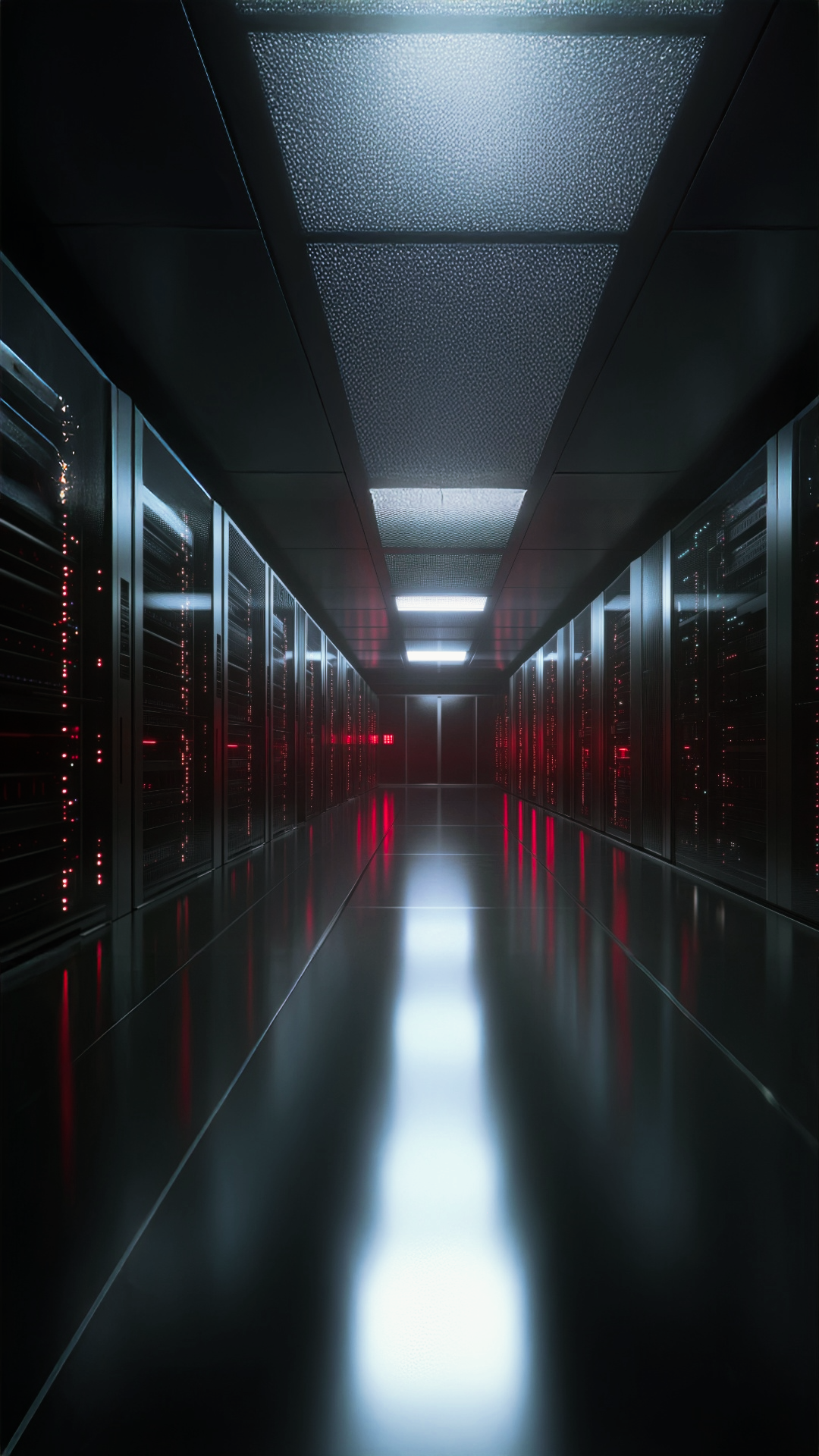
The artificial intelligence applied to cooling data centers represents one of the most significant innovations in industrial energy optimization.
The autonomous system developed by Google DeepMind, operational since 2018, has shown how AI can transform thermal management of critical infrastructure, delivering concrete results in terms of operational efficiency.
Innovation Transforming Data Centers.
The Problem of Energy Efficiency
Modern data centers are enormous energy consumers, with cooling accounting for around 10% of total electricity consumption according to Jonathan Koomey, a world-renowned expert on energy efficiency. Every five minutes, Google's cloud-based AI system captures a snapshot of the cooling system from thousands of sensors Safety-first AI for autonomous data centre cooling and industrial control - Google DeepMind, analyzing an operational complexity that challenges traditional control methods.
Google's AI cooling system uses deep neural networks to predict the impact of different combinations of actions on future energy consumption, identifying which actions will minimize consumption while respecting robust safety constraints DeepMind AI Reduces Google Data Centre Cooling Bill by 40% - Google DeepMind.
Concrete and Measurable Results
The results achieved in cooling optimization are significant: the system has been able to consistently achieve a 40% reduction in energy used for cooling. However, considering that cooling accounts for around 10% of total consumption, this translates to roughly a 4% overall energy saving for the data center.
According to the original technical paper by Jim Gao, the neural network achieves a mean absolute error of 0.004 and a standard deviation of 0.005, equivalent to a 0.4% error for a PUE of 1.1.
Where It Works: The Confirmed Data Centers
Verified Implementations
The implementation of the AI system has been officially confirmed in three specific data centers:
Singapore: The first significant deployment in 2016, where the data center uses recovered water for cooling and demonstrated the 40% reduction in cooling energy.
Eemshaven, Netherlands: The data center uses industrial water and consumed 232 million gallons of water in 2023. Marco Ynema, site lead of the facility, oversees operations at this advanced facility.
Council Bluffs, Iowa: MIT Technology Review specifically showcased the Council Bluffs data center while discussing the AI system. Google has invested $5 billion across the two Council Bluffs campuses, which consumed 980.1 million gallons of water in 2023.
A cloud-based AI control system is now operational and delivering energy savings across multiple Google data centers, but the company has not published a full list of the facilities using the technology.
Technical Architecture: How It Works
Deep Neural Networks and Machine Learning
According to patent US20180204116A1, the system uses a deep learning architecture with precise technical characteristics:
- 5 hidden layers with 50 nodes per layer
- 19 normalized input variables including thermal loads, weather conditions, and equipment status
- 184,435 training samples at 5-minute resolution (roughly 2 years of operational data)
- Regularization parameter: 0.001 to prevent overfitting
The architecture uses Model Predictive Control with linear ARX models integrated with deep neural networks. The neural networks don't require the user to predefine interactions between variables in the model. Instead, the neural network searches for patterns and interactions between features to automatically generate an optimal model.
Power Usage Effectiveness (PUE): The Key Metric
PUE represents the fundamental energy efficiency metric for data centers:
PUE = Total Data Center Energy / IT Equipment Energy
- Google fleet-wide PUE: 1.09 in 2024 (according to Google's environmental reports)
- Industry average: 1.56-1.58
- Ideal PUE: 1.0 (theoretically impossible)
Google holds ISO 50001 certification for energy management, which ensures strict operational standards but does not specifically validate AI system performance.
MPC (Model Predictive Control)
At the heart of the innovation is predictive control, which forecasts the data center's future temperature and pressure for the next hour, simulating recommended actions to ensure operational constraints aren't exceeded.
Operational Benefits of AI in Cooling
Superior Predictive Accuracy
After trial and error, the models are now 99.6% accurate in predicting PUE. This precision enables optimizations impossible with traditional methods, simultaneously managing the complex nonlinear interactions between mechanical, electrical, and environmental systems.
Continuous Learning and Adaptation
A notable aspect is the evolutionary learning capability. Over nine months, the system's performance increased from a 12% improvement at initial launch to roughly a 30% improvement.
Dan Fuenffinger, Google operator, noted, "It was amazing to see AI learn to take advantage of winter conditions and produce colder-than-normal water. The rules don't get better over time, but AI does."
Multi-Variable Optimization
The system simultaneously manages 19 critical operational parameters:
- Total IT load from servers and networking
- Weather conditions (temperature, humidity, enthalpy)
- Equipment status (chillers, cooling towers, pumps)
- Setpoints and operational controls
- Fan speeds and VFD systems
Security and Control: Fail-Safe Guaranteed
Multi-Level Verification
Operational safety is ensured through redundant mechanisms. The optimal actions calculated by the AI are checked against an internal list of safety constraints defined by operators. Once sent to the physical data center, the local control system verifies the instructions again DeepMind AI reduces energy used for cooling Google data centers by 40%.
Operators maintain control at all times and can exit AI mode at any time, seamlessly transferring to traditional rules.
Limitations and Methodological Considerations
PUE Metrics and Its Limitations
Industry recognizes the limitations of Power Usage Effectiveness as a metric. A 2014 Uptime Institute survey found that 75 percent of respondents believed the industry needed a new efficiency metric. Problems include climate bias (impossible to compare different climates), time manipulation (measurements during optimal conditions), and component exclusion.
Complexity of Implementation
Each data center has unique architecture and environment. A custom model for one system may not be applicable to another, requiring a general intelligence framework.
Data Quality and Verifications
Model accuracy depends on the quality and quantity of input data. Model error generally increases for PUE values above 1.14 due to the scarcity of corresponding training data.
No independent audits by major audit firms or national laboratories were found, with Google "not pursuing third-party audits" beyond the minimum federal requirements.
The Future: Evolution toward Liquid Cooling
Technology Transition
In 2024-2025, Google has shifted emphasis dramatically to:
- +/-400 VDC power systems for 1MW racks
- "Project Deschutes" cooling distribution units
- Direct liquid cooling for TPU v5p with "99.999% uptime"
This change indicates that AI optimization has reached practical limits for thermal loads in modern AI applications.
Emerging Trends
- Edge computing integration: Distributed AI for reduced latency
- Digital twins: Digital twins for advanced simulation
- Sustainability focus: Optimization for renewable energy
- Hybrid cooling: AI-optimized liquid/air combination
Applications and Opportunities for Companies
Areas of Application
AI optimization for cooling has applications extending beyond data centers:
- Industrial plants: Optimization of manufacturing HVAC systems
- Shopping centers: Intelligent climate control management
- Hospitals: Environmental control for operating rooms and critical areas
- Corporate offices: Smart building and facility management
ROI and Economic Benefits
Energy savings on cooling systems translate into:
- Reduced operating costs of the cooling subsystem
- Improved environmental sustainability
- Extended equipment lifespan
- Greater operational reliability
Strategic Implementation for Companies
Adoption Roadmap
Phase 1 - Assessment: Energy audit and mapping of existing systemsPhase 2 - Pilot: Testing in a controlled environment on a limited sectionPhase 3 - Deployment: Progressive rollout with intensive monitoringPhase 4 - Optimization: Continuous tuning and capacity expansion
Technical Considerations
- Sensor infrastructure: Complete monitoring network
- Team skills: Data science, facility management, cybersecurity
- Integration: Compatibility with legacy systems
- Compliance: Safety and environmental regulations
FAQ - Frequently Asked Questions
1. In which Google data centers is the AI system actually operational?
Three data centers are officially confirmed: Singapore (first deployment 2016), Eemshaven in the Netherlands, and Council Bluffs in Iowa. The system is operational in multiple Google data centers but the full list has never been publicly disclosed.
2. How much energy savings does it actually produce on total consumption?
The system achieves a 40% reduction in the energy used for cooling. Considering that cooling accounts for about 10% of total consumption, the total energy savings is about 4% of total data center consumption.
3. What is the system's prediction accuracy?
The system achieves 99.6% accuracy in PUE prediction with a mean absolute error of 0.004 ± 0.005, equivalent to a 0.4% error for a PUE of 1.1. If the actual PUE is 1.1, the AI predicts between 1.096 and 1.104.
4. How does it ensure operational safety?
It uses two-level verification: first the AI checks the security constraints defined by the operators, then the local system checks the instructions again. Operators can always turn off AI checking and return to traditional systems.
5. How much time is needed to implement a similar system?
Implementation typically takes 6-18 months: 3-6 months for data collection and model training, 2-4 months for pilot testing, 3-8 months for phased deployment. Complexity varies significantly depending on the existing infrastructure.
6. What technical skills are required?
It takes a multidisciplinary team with expertise in data science/AI, HVAC engineering, facility management, cybersecurity, and system integration. Many companies opt for partnerships with specialized vendors.
7. Can the system adapt to seasonal changes?
Yes, the AI automatically learns to take advantage of seasonal conditions, such as producing colder water in winter to reduce cooling energy. The system continuously improves by recognizing temporal and climate patterns.
8. Why doesn't Google commercialize this technology?
Each data center has unique architecture and environment, requiring significant customization. The complexity of implementation, need for specific data, and required skills make direct commercialization complex. After 8 years, this technology remains exclusively internal to Google.
9. Are there independent verifications of performance?
No independent audits by major audit firms (Deloitte, PwC, KPMG) or national laboratories were found. Google holds ISO 50001 certification but "does not pursue third-party audits" beyond the minimum federal requirements.
10. Is it applicable to sectors other than data centers?
Absolutely. AI optimization for cooling can be applied to industrial plants, shopping centers, hospitals, corporate offices, and any facility with complex HVAC systems. The principles of multi-variable optimization and predictive control are universally applicable.
The Google DeepMind AI cooling system represents an engineering innovation that achieves incremental improvements within a specific scope. For companies managing energy-intensive infrastructure, this technology offers concrete opportunities for cooling optimization, albeit with the scale limitations highlighted.
Main sources: Jim Gao Google Research Paper, DeepMind Official Blog, MIT Technology Review, Patent US20180204116A1
Comments
No comments yet — start the conversation.